Epoxy Resin: Types, Uses & How to Choose (Guide)
Epoxy resin is the material behind glass-clear river tables, glossy bar tops, jewellery, art panels and hard-wearing garage floors. It is also one of the most misunderstood products in DIY. Buy the wrong type and a pour that should be crystal clear can crack, yellow, stay sticky or even smoke in the mould. Buy the right one and it is remarkably forgiving.
We pour epoxy every week in our London workshop, from thin flood coats to deep table castings, and the most important decision is always made before the tub is opened: which resin for which job. This guide explains how epoxy resins work, the main types (coating, deep pour, UV-resistant, marine and food-contact), how to choose by project, and how to work safely.
What is epoxy resin?
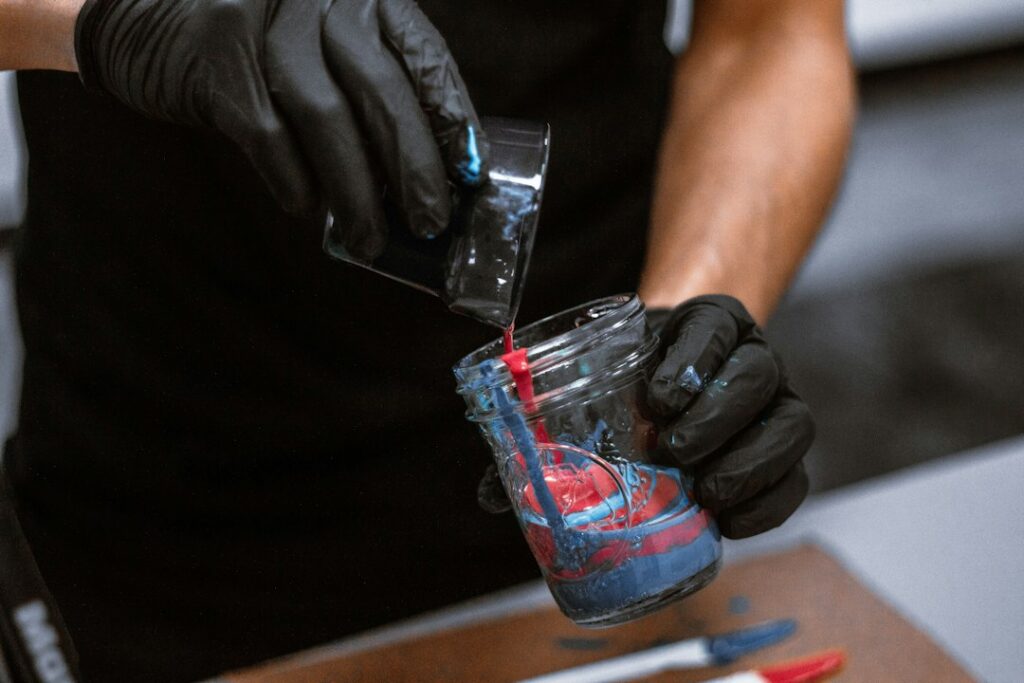
Epoxy resin is a two-part thermosetting plastic. Part A is the resin, part B is the hardener (sometimes called the curing agent). On their own, both stay liquid. Mixed in the correct ratio, they react chemically and link together into a solid, rigid network. This reaction, called curing, is irreversible: once cured, epoxy will not melt again.
A few chemistry basics explain most of epoxy’s behaviour:
- The ratio is fixed. Resin and hardener molecules pair up in set proportions, commonly 1:1 or 2:1 by volume, but some are measured by weight. Adding extra hardener does not speed the cure; it leaves unreacted material and a soft or sticky result.
- The reaction makes heat. Curing is exothermic. The more resin in one mass, the more heat it builds, which speeds the reaction further. That is why a cup of mixed epoxy can get hot while the same amount spread thinly stays cool.
- Temperature controls speed. Warmer means faster cure and shorter working time; colder means slower cure and, below about 15°C, risk of cloudiness and incomplete curing.
- Viscosity matters. Thin resins release bubbles easily and penetrate wood; thick resins self-level less but hold on vertical edges.
Types of epoxy resin
Manufacturers formulate epoxy resins for different jobs by changing viscosity, cure speed and additives. These are the main categories you will meet.
Coating (table top) epoxy
Coating epoxy, also called flood coat, doming or table top epoxy, is a thicker, faster-curing resin designed to be poured in thin layers, typically up to about 3–6 mm per coat. It self-levels into a glossy, hard surface and is used to seal table tops, bar tops, art panels and countertops. Pour it too deep and it overheats. See our guides to table top epoxy and bar top epoxy for application detail.
Deep pour (casting) epoxy
Deep pour epoxy is thin and slow-curing, designed to fill thick sections in one go: river tables, castings and large moulds. Depending on the product and the volume, a single layer is typically 25–50 mm, sometimes more. Cure is slow, often 3–7 days, which lets heat escape and air bubbles rise. Our deep pour epoxy guide covers depth limits and layering.
UV-resistant epoxy
All epoxies yellow eventually in sunlight because ultraviolet light breaks down the cured polymer. UV-resistant formulations add stabilisers that slow this down, which matters for white or clear pieces, art hung near windows and furniture in bright rooms. No epoxy is fully UV-proof; read our UV-resistant epoxy resin guide for what to expect.
Marine and structural epoxy
Marine epoxies are designed for bonding and sealing wood, fibreglass and composites. They are typically low-viscosity, often amber-tinted, and prioritise adhesion and water resistance over clarity. They are excellent for sealing, laminating and repairs, but not for clear decorative pours.
Wood-penetrating and sealing epoxy
Very thin epoxies soak into timber to stabilise punky or spalted wood and seal pores before a deep pour, preventing air escaping from the wood and creating bubbles. Our guide to epoxy sealer for wood explains when to use one.
Food-contact epoxy
Some epoxies are tested to food-contact regulations once fully cured, making them suitable for cutting-board edges, serving trays and countertops where food may touch. Look for clear statements of compliance on the technical data sheet, follow the full cure time exactly, and remember that cured epoxy is not a cutting surface. Mixing errors or under-curing can mean the finished surface does not meet the claimed standard.
Floor epoxy
Floor systems are a different family altogether, formulated for abrasion, chemical resistance and bonding to concrete rather than clarity. If your project is a floor, start with our epoxy floor guide instead.
| Type | Typical max pour per layer | Typical cure to handle | Best for |
|---|---|---|---|
| Coating / table top | 3–6 mm | 12–24 hours | Seal coats, bar tops, art panels |
| Deep pour / casting | 25–50 mm+ | 48–96 hours | River tables, castings, thick moulds |
| UV-resistant | Varies by product | Varies | Clear or white pieces exposed to light |
| Marine / structural | Thin coats | 6–24 hours | Bonding, laminating, sealing timber |
| Wood sealer | Penetrating coat | Several hours | Stabilising and sealing wood before pours |
| Floor systems | 0.2–4 mm | 12–72 hours | Garages, basements, concrete |
Epoxy resin vs other resins
People often say resin when they mean epoxy, but there are others:
- Polyester resin – cheaper and faster, with strong fumes and more shrinkage. Common in fibreglass work, less suited to furniture and art.
- Polyurethane resin – very fast casting resins, often opaque, used for small parts and models. Some clear polyurethane varnishes are used as UV-stable topcoats.
- UV-curing resin – a one-part resin that cures under a UV lamp in minutes. Great for tiny jewellery work; impractical for anything thick or large.
For tables, coatings and most art, epoxy offers the best mix of clarity, low shrinkage, strength and working time.
How to choose epoxy resin for your project
| Project | Resin to choose | Key considerations |
|---|---|---|
| River or live-edge table | Deep pour | Check max depth; seal timber first |
| Sealing a table top or bar | Coating epoxy | Heat and scratch resistance, self-levelling |
| Coasters, trays, jewellery | Coating or low-depth casting resin | Clarity, bubble release, mould type |
| Art panels and canvases | Coating epoxy | UV resistance, gloss, working time for colours |
| Charcuterie boards and serveware | Food-contact rated | Full cure, documented compliance |
| Outdoor or sunlit pieces | UV-resistant, plus UV-stable topcoat | Expect gradual yellowing regardless |
| Bonding and repairs | Marine/structural | Adhesion over clarity |
| Concrete floors | Floor-rated system | Abrasion and moisture tolerance |
Beyond type, compare these on the data sheet:
- Mix ratio – volume or weight, and how easy it is to measure accurately.
- Pot life and working time – longer is easier for large or detailed pours.
- Maximum pour depth – the single most important number for castings.
- Viscosity – lower releases bubbles better.
- Heat resistance – important for tables where hot mugs land.
- Clarity and UV stabilisers.
- Shore D hardness – higher is more scratch-resistant.
Working with epoxy resin: the essentials
- Warm everything – resin, hardener, room and project – to typically 20–25°C.
- Measure precisely using graduated cups or scales.
- Mix thoroughly, typically 3–5 minutes, scraping sides and bottom. Many makers transfer to a second cup and mix again.
- Pour promptly so heat doesn’t build in the cup.
- Release bubbles with a heat gun or torch held well above the surface.
- Cover and cure at stable temperature, away from dust.
Our step-by-step guide to how to pour epoxy resin goes into each stage. Large castings need a proper form – see our resin molds guide for mould choice and sealing.
Epoxy resin safety
Epoxy is safe to work with when handled properly, but it is a common cause of skin sensitisation. Once sensitised, some people react to even small exposures for life.
- Wear nitrile gloves every time; latex and vinyl are less protective.
- Wear eye protection and long sleeves.
- Work in a well-ventilated space; use a respirator with organic vapour cartridges for large pours, enclosed rooms or if you are sensitive to smell.
- Wear a dust mask (FFP2/FFP3) when sanding cured epoxy.
- Never leave a large mass of mixed epoxy in a container – it can overheat and smoke.
- Clean uncured resin from skin with soap and water or a dedicated cleanser, never solvents.
- Store at room temperature, sealed and away from children and pets.
Common epoxy resin problems
| Problem | Usual cause |
|---|---|
| Sticky or soft patches | Wrong ratio or poor mixing |
| Cracking, yellowing, smoke | Poured too deep for the resin type |
| Cloudiness or greasy film | Too cold or humid (amine blush) |
| Bubbles | Cold resin, aggressive mixing, unsealed wood |
| Fish eyes and craters | Contamination, silicone or oil on the surface |
For a concise, independent summary of the chemistry, Britannica’s entry on epoxy explains how these thermosetting polymers form tough, chemical-resistant coatings and adhesives once the resin is combined with a curing agent.
Watch it being made
Watch our first light-up resin table being made in the workshop, with dragons and creatures appearing in the resin art, and the colours, pours and finishing shown step by step.
Resin Art Dragons and creatures in resin art table My First Light-Up Resin Table. More builds on the Go Bespoke YouTube channel.
Frequently asked questions
What is epoxy resin used for?
Coating and sealing table tops and bars, casting river tables, making art, jewellery and homeware, bonding and repairing wood and boats, and coating concrete floors.
Is epoxy resin the same as resin?
Epoxy is one type of resin. Others include polyester, polyurethane and UV-curing resins, which behave differently and suit different jobs.
How long does epoxy resin take to cure?
Coating epoxies typically become touch-dry in 12–24 hours and reach full cure in about 3–7 days. Deep pour resins take longer, often 3–7 days to handle and longer for full hardness.
Is epoxy resin food safe?
Only products documented as compliant with food-contact regulations, and only once fully cured. Check the technical data sheet rather than assuming.
Is epoxy resin waterproof?
Fully cured epoxy is highly water-resistant, which is why it is used in boatbuilding. Prolonged UV exposure and heat can degrade it over time.
Can epoxy resin be used outside?
It can, but it will yellow in sunlight. Use a UV-resistant resin and protect it with a UV-stable topcoat, and accept that outdoor pieces will need maintenance.
Where to go next
If you are just starting out, our epoxy resin for beginners guide walks through a first project from start to finish. Watch our builds on the Go Bespoke YouTube channel, and if you would like a resin table or piece of lit resin furniture made for you, contact us about a bespoke commission.
All guides in this section
- Best Epoxy for River TableFind the best epoxy for river table builds: viscosity, pour depth, clarity, UV resistance, cure time and reading datasheets.
- Clear Epoxy Resin: How to Get Glass-Clear ResultsGet glass-clear results with clear epoxy resin: beat bubbles, amine blush and yellowing, choose the clearest resin for your project and pour…
- Epoxy Resin for TablesEpoxy resin for tables explained: deep pour, table top, coating and casting resins compared so you choose the right one for each…
- Epoxy Resin KitChoosing an epoxy resin kit: what is inside, kit sizes, extras worth buying and the best kit for each type of project.
- Food Safe Epoxy: What Is Safe for Boards & TablesIs food safe epoxy really safe? FDA and UK/EU contact rules, how to reach a full cure, and which boards and surfaces…
- Marine Epoxy: Boat Building & Repair Resin GuideMarine epoxy explained: how it differs from table epoxy, fibreglass laminating, fillers, amine blush, and when furniture makers use it.
- Two Part Epoxy: How 2-Part Systems Work & Which to UseHow two part epoxy works: 1:1 vs 2:1 vs 3:1 mix ratios, pot life and cure times, and how to choose and…
- Ultra Clear Epoxy: Non-Yellowing Formulas ComparedUltra clear epoxy explained: UV stabilisers, formula types compared, what to check on data sheets and a simple water-white test before you…
- UV Light for Resin: Lamps, Torches & Curing TimesUV light for resin explained: 365 vs 395 nm, nail lamps vs torches, real wattage and typical curing times for UV resin…
- UV Resin: How It Works, Pros, Cons & Best UsesUV resin explained: how UV cure resin hardens, depth limits, UV resin vs epoxy, whether it's toxic, safety tips and what to…
- UV Resistant Epoxy ResinUV resistant epoxy resin explained: UV stabilisers and HALS, yellowing in sunlight, placement tips and protective topcoats.
- What Is Resin? Types, Uses & What It Is Made OfWhat is resin? Natural vs synthetic resin, what it is made of, how it cures, the main types (epoxy, polyester, UV) and…
- Wood Epoxy: Choosing the Right Epoxy for WoodworkingWood epoxy explained: choose the right resin to seal, coat, fill, stabilise or deep pour, prep timber properly and avoid common woodworking…