What Is Resin? Types, Uses & What It Is Made Of
Updated 15 October 2026
Resin is everywhere: in the glossy river tables on social media, the coating on a garage floor, the varnish on a violin and the amber jewellery in a museum case. But what is resin, exactly? In short, resin is a thick, sticky substance – natural or synthetic – that starts as a liquid or soft solid and hardens into a durable, often clear material. This guide explains what resin is made of, how it cures, the main types you will come across and what each is used for, so you can choose the right material for your next project.
If you already know you will be working with two-part epoxy, our epoxy resin guide goes deeper into formulations and how to choose one.
What is resin? A simple definition
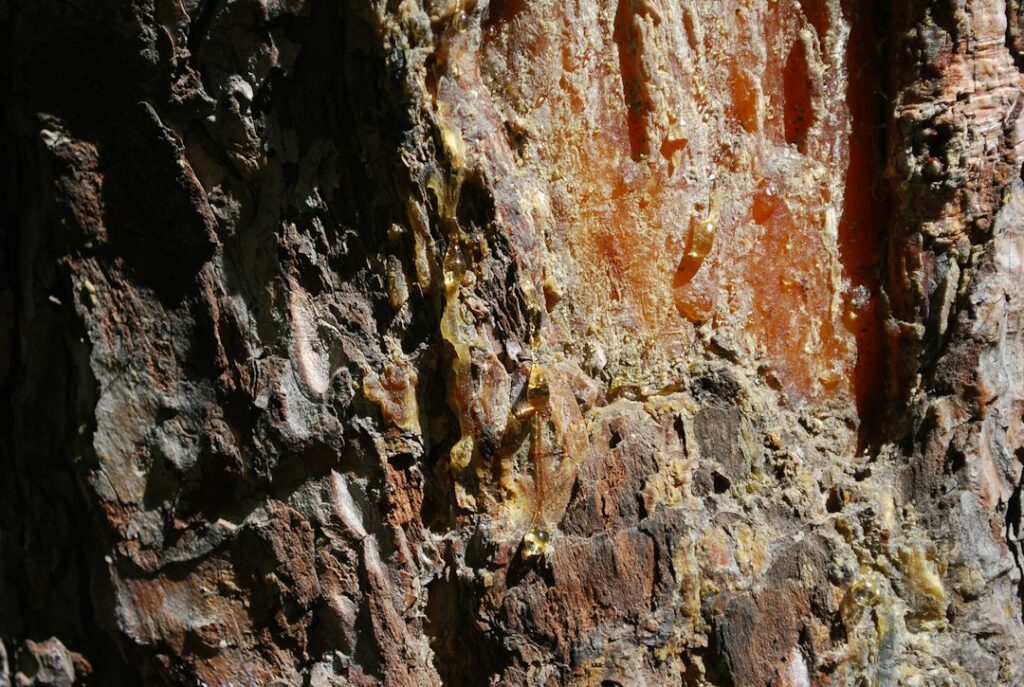
Resin is a broad name for viscous substances that can be converted into a rigid polymer. Some come straight from nature, oozing from trees to seal wounds in the bark. Others are manufactured from petrochemicals and designed to cure in a controlled way. What links them is behaviour: they start runny or tacky, then harden through evaporation, cooling or a chemical reaction.
When most makers today talk about resin material, they mean a synthetic thermosetting resin – one that undergoes an irreversible chemical change when it cures. Once set, it will not melt back into a liquid.
Natural vs synthetic resin
Natural resins
Natural resins are produced by plants, mainly conifers such as pine and fir, and by some tropical trees. Examples include:
- Rosin – a solid form of pine resin used on violin bows, in soldering flux and for grip in sport.
- Amber – fossilised tree resin, millions of years old, prized for jewellery.
- Copal and dammar – used historically in varnishes and incense.
- Frankincense and myrrh – aromatic resins used in perfume and incense.
- Shellac – technically secreted by the lac insect rather than a tree, but traditionally grouped with natural resins and still used in French polishing.
Synthetic resins
Synthetic resins are made in chemical plants and designed for specific properties: clarity, strength, flexibility, heat resistance or fast curing. The most common families are:
| Type | How it cures | Typical uses |
|---|---|---|
| Epoxy resin | Two-part: resin plus hardener react chemically | Tables, art, coatings, floors, adhesives, boat repair |
| Polyester resin | Resin plus a small amount of catalyst (MEKP) | Fibreglass, boat hulls, car body repair, some castings |
| Polyurethane resin | Two-part; often fast-setting | Casting small parts, foams, flexible coatings, varnishes |
| UV resin | Cures under ultraviolet light | Jewellery, small crafts, quick repairs, 3D printing |
| Acrylic resin | Polymerised acrylic; varies by system | Paints, sheet plastics, dental and display work |
What is resin made of?
Natural resin is made of organic compounds called terpenes and related acids that the tree produces and exudes. As the volatile parts evaporate, the remaining material hardens.
Synthetic resin is made from petrochemical building blocks. Epoxy resin, for example, is typically based on a compound formed from bisphenol A and epichlorohydrin, which gives molecules with reactive epoxide groups at each end. The hardener – usually an amine – links those molecules together into a dense three-dimensional network. Fillers, UV stabilisers, flow agents and pigments may be added to tune the finished material.
How does resin cure?
Curing is the process of a liquid resin turning into a solid. It happens in different ways:
- Evaporation – natural resins and some varnishes harden as solvents evaporate.
- Chemical reaction – two-part systems such as epoxy react when mixed, releasing heat (an exothermic reaction).
- Light activation – UV resins contain photoinitiators that trigger curing under UV light.
With two-part epoxy, temperature and mass both matter. Warm conditions speed the cure; a large volume in one pour builds heat quickly, which is why deep pour epoxy is formulated to react more slowly. Most coating epoxies are touch dry within about 12–24 hours and fully cured after several days.
What is resin used for?
Resin is used in a remarkable range of places. The most common include:
- Furniture – river tables, live edge tables and illuminated pieces; see our overview of resin furniture.
- Art and crafts – pours, coasters, jewellery and wall art; explore resin art for ideas.
- Preservation – embedding flowers, keepsakes and specimens, as in preserving flowers in resin.
- Casting – filling silicone or plastic resin moulds to make objects and decorative parts.
- Woodwork repairs – filling knots, cracks and voids with an epoxy wood filler.
- Floors and coatings – hard-wearing surfaces for garages and workspaces; our epoxy floor guide explains how they work.
- Industry – adhesives, composites in aircraft, wind turbine blades and boats, electronics encapsulation and 3D printing.
Is resin plastic?
Cured synthetic resin is a type of plastic – specifically a thermoset polymer. Unlike thermoplastics such as polythene, which can be melted and reshaped, thermosets keep their shape once cured. That makes them hard, heat-resistant and stable, but it also means they cannot be easily recycled.
Is resin safe?
Cured resin is generally inert and stable. The risks come mostly from uncured resin and hardener, and from sanding dust:
- Wear nitrile gloves – repeated skin contact with uncured epoxy can cause sensitisation and allergic reactions.
- Work in a well-ventilated area and consider a respirator with organic vapour cartridges, particularly with polyester or polyurethane resins, which have stronger fumes.
- Wear eye protection when mixing and pouring.
- Use a dust mask or respirator and extraction when sanding cured resin.
- Never pour more than the product’s stated maximum depth – an overheating pour can smoke, crack or warp.
If you are new to the material, start with our epoxy resin for beginners guide, which walks through setup and first projects.
Choosing the right resin material for a project
Ask four questions before you buy:
- How thick is the pour? Thin coatings suit table top or art resin; thick castings need deep pour formulations.
- Will it see sunlight? All epoxies yellow eventually under UV, but stabilised products resist it longer – see our notes on UV resistant epoxy resin.
- Does it need to be food safe? Look for products that state compliance for food contact once fully cured.
- How fast do you need it? UV resin cures in minutes for small items; epoxy takes days but offers clarity and strength at larger scales.
If you want to go further into the history and chemistry, Wikipedia’s article on resin covers natural resins from plants and fossils such as amber alongside the synthetic types, including epoxy, used today.
Watch it being made
Watch our first light-up resin table being made in the workshop, with dragons and creatures appearing in the resin art, and the colours, pours and finishing shown step by step.
Resin Art Dragons and creatures in resin art table My First Light-Up Resin Table. More builds on the Go Bespoke YouTube channel.
Frequently asked questions
What is resin made of?
Natural resin is made of organic compounds produced by trees, mostly terpenes and resin acids. Synthetic resins such as epoxy are made from petrochemicals, combined with a hardener or catalyst that turns the liquid into a solid polymer.
What is resin used for?
Resin is used for furniture, art, jewellery, casting, coatings, floors, adhesives, boat and car repair, composites and 3D printing. Natural resins are also used in varnishes, incense and musical instrument rosin.
Is resin the same as epoxy?
No. Epoxy is one type of resin. Resin is the broader category, which also includes polyester, polyurethane, UV and natural resins. Epoxy is the most popular for tables and art because it is clear, strong and low-odour.
Is resin a liquid or a solid?
Both, depending on stage. Resin starts as a liquid or soft, sticky solid and becomes a hard solid after curing. Cured synthetic resin will not return to a liquid.
Is resin waterproof?
Fully cured epoxy and polyester resins are water resistant and widely used to waterproof wood and boats. Long-term outdoor exposure, however, will eventually degrade most resins, particularly through UV.
See resin in action
Want to see how resin behaves when it is poured, coloured and polished? Watch our builds on the Go Bespoke YouTube channel, or continue to our full guide to epoxy resin linked above.