Glow in the Dark Epoxy
Updated 16 October 2026
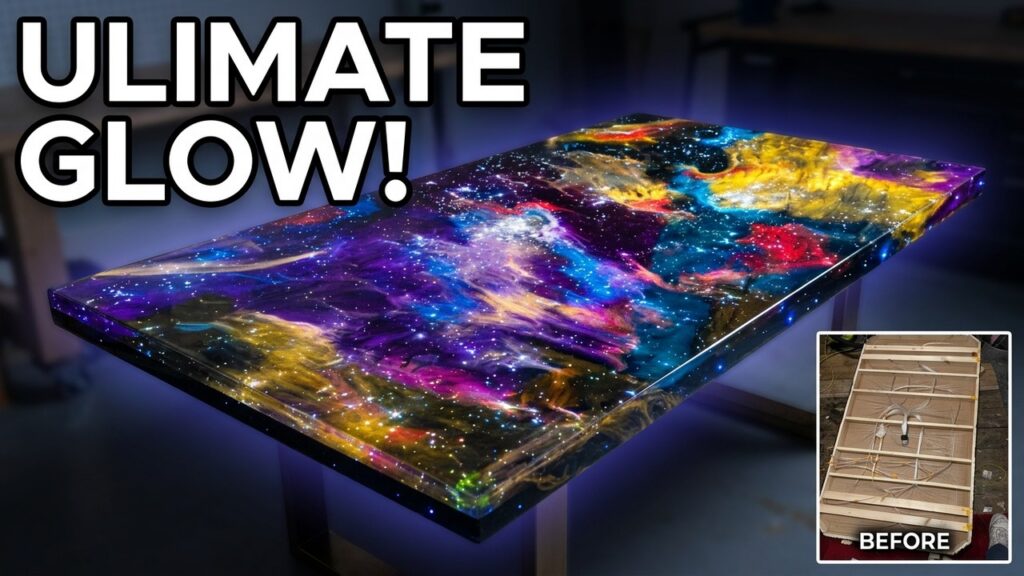
Glow in the dark epoxy turns an ordinary resin piece into something that changes after sunset. By day it can look like pale sand, soft white or a subtle tint; switch off the lights and it shines with a cool green or aqua light that seems to come from inside the material. No wiring, no batteries and no switches are involved. The glow comes entirely from a special family of pigments that store light and release it slowly.
This guide explains the science of those pigments in plain words, how they charge, which colours glow brightest and longest, and how much to mix into your resin for a strong, even result.
What makes glow in the dark epoxy shine
The effect is called photoluminescence, and more specifically phosphorescence. Modern glow pigments are usually based on strontium aluminate doped with small amounts of rare earth elements such as europium and dysprosium. When light hits a pigment particle, electrons inside it are pushed into a higher energy state. Some of them become trapped there and only escape gradually. Each time one falls back, it gives off a tiny burst of visible light. Millions of those releases together create the steady glow you see.
Older glow products used zinc sulphide, which charges quickly but fades within minutes. Strontium aluminate is far brighter and lasts much longer, which is why it has become the standard for resin work. It is also non-radioactive and stable when encapsulated in cured epoxy.
Charging the pigment with light
Glow pigment is like a rechargeable battery for light. The stronger and bluer the light source, the faster and fuller the charge.
- Daylight: very effective, even indirect daylight from a window.
- UV or blacklight: charges strontium aluminate almost instantly and gives the brightest initial glow.
- Cool white LEDs: work well and are handy for a quick charge in the evening.
- Warm white bulbs: charge more slowly because they contain less blue and violet light.
Placement matters. A glowing resin table near a window will charge throughout the day and glow when the room darkens. A piece in a dim hallway may need a small UV lamp or a few minutes under a bright light to perform well.
Glow colours and how long they last
Not all glow colours are equal. Green and aqua are the brightest and longest-lasting because the human eye is most sensitive to that part of the spectrum, and the pigments themselves emit strongly there. Blue is popular and still bright, though it tends to fade a little sooner to the eye. Purple, orange, red and pink pigments are available, but they are noticeably dimmer and their glow fades more quickly.
The glow is brightest in the first few minutes after the lights go out, then settles into a softer level that can remain visible for hours in a fully dark room. Your eyes also adapt to the dark, so a piece that seems faint at first often looks stronger after a minute or two.
How much glow powder to mix into epoxy
Getting the ratio right is the key to an even, bright glow in your glow in the dark epoxy. Too little and the glow looks patchy; too much and the resin becomes thick and hard to pour, with more risk of trapped air.
- Start with a test: mix small batches at different ratios and pour them into silicone cups so you can compare them side by side in the dark.
- Typical range: many makers use roughly one part powder to between three and ten parts resin by volume, depending on how intense they want it. Follow your pigment supplier’s guidance.
- Mix the resin first: combine resin and hardener fully, then fold in the powder slowly to avoid lifting dust and adding air.
- Keep it moving: glow particles are heavy and sink, so stir occasionally before pouring.
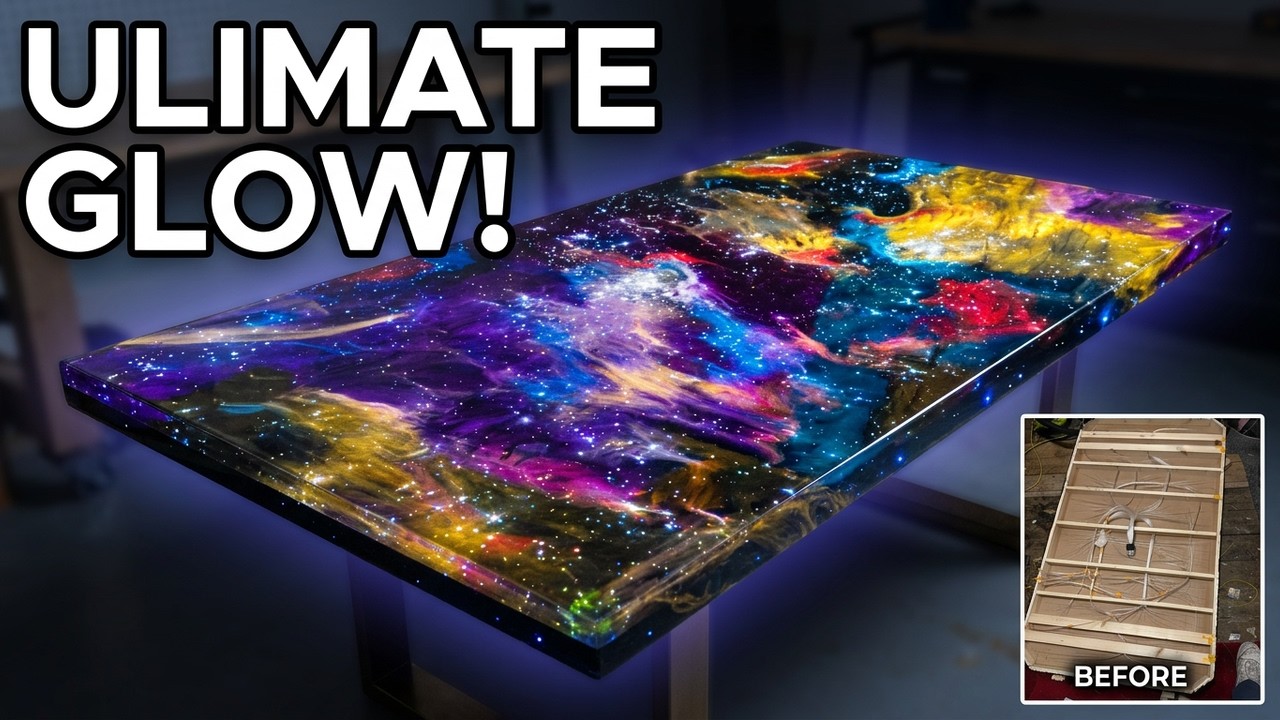
Because the powder settles, many makers take advantage of this by pouring a glow layer at the back or bottom of a piece, then covering it with clear resin. The glow sits behind a clear window, which protects it and makes the light look deeper. Our guide on how to make a glowing resin table uses exactly this layering.
Design tips for glow in the dark epoxy
Glow works best when it has room to shine. A thin, light-coloured base or a clear layer in front of it lets the most light out. Dark tints and heavy opaque pigments mixed with the glow powder will smother the effect.
Think about the daylight look too. Glow powders are usually pale in daylight, so they read as off-white, cream or a faint tint. Some makers combine a glow layer with a transparent colour so the piece looks blue by day and glows green or aqua at night. For more concepts, see our epoxy table lighting ideas. Glow pebbles and pre-made glow stones can be scattered into a pour for spots of light rather than a solid wash.
Safety when handling glow pigments
Strontium aluminate powder is fine and can irritate the lungs and eyes if it becomes airborne. Open containers gently, measure in a draught-free spot and wear a dust mask or respirator while handling it. When mixing and pouring resin, work in a well-ventilated area, wear nitrile gloves and use an organic-vapour respirator. Keep the powder dry and sealed, because moisture can degrade it before it is encapsulated.
Most long-lasting glow powders are based on strontium aluminate, and Wikipedia’s page on phosphorescence explains why these pigments keep releasing light for hours after the room goes dark.
Frequently asked questions
Does glow in the dark epoxy wear out over time?
Strontium aluminate sealed in cured resin can be charged and discharged many thousands of times. The glow does not wear out in normal use, though very prolonged exposure to strong UV can affect the surrounding resin.
Can I mix glow powder with coloured pigment?
You can, but use only transparent colours in small amounts. Opaque pigments block the light from reaching and leaving the glow particles, which dims the effect sharply.
Why does my glow look uneven?
Uneven glow usually means the powder settled before cure or was not mixed in fully. Stir gently before pouring and consider pouring a thinner layer that cures more quickly.
Watch glowing resin come to life
For more resin builds that glow, shimmer and light up, subscribe to the Go Bespoke YouTube channel @go-bespoke, where we share the techniques behind our own illuminated pieces.
Top 10 most-watched on YouTube
Video 1 of 10 — one of the most-viewed YouTube videos for “glow in the dark epoxy”: 3 Magic KNIVES from RESIN ART (1 glows in the dark) by Evan and Katelyn (3,937,143 views as of 13 October 2026).
Want a piece that glows after dark? Get in touch for a bespoke quote.