Best Epoxy for River Table
Updated 15 October 2026
The best epoxy for river table work is the one whose properties match your slab, your workshop and your patience, not simply the one with the boldest label. A river may be several centimetres deep and the length of a dining table, so the resin has to flow into every crevice, release its bubbles, cure without cracking or overheating and stay crystal clear for decades.
This guide sets out the selection criteria that matter most, explains what each one means in practice and shows you how to compare manufacturers’ datasheets side by side, so you can choose with confidence rather than guesswork.
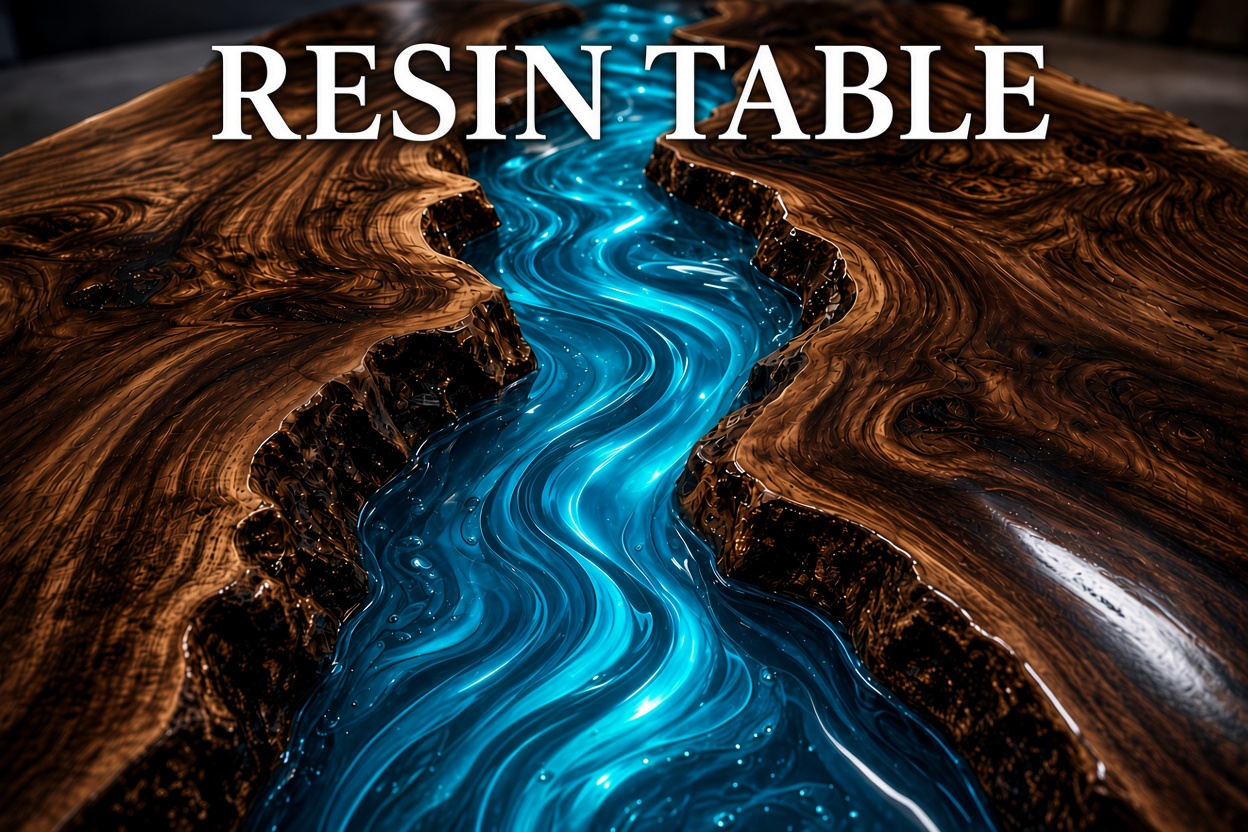
What makes the best epoxy for river table pours
River tables are demanding because of volume. A thin coating resin cures quickly and generates heat; poured too thick, it can overheat, crack, yellow or even smoke. River work therefore relies on slow-curing deep pour resins designed to release heat gradually. Within that category, six criteria separate a good choice from a poor one:
- Viscosity: how easily the mixed resin flows and releases bubbles.
- Maximum pour depth: how thick a single layer can safely be.
- Clarity: how clear and colourless the cured resin is.
- UV resistance: how well it resists yellowing in daylight.
- Cure time: how long until you can demould, flatten and finish.
- VOC and smell: how much odour and vapour it releases during work.
Viscosity and bubble release
Low-viscosity resin is thin and watery. It soaks into timber edges, flows into cracks and lets air rise and escape before it sets. That is exactly what the river of an epoxy river table needs. Thicker resins hold bubbles and may trap air along the timber edges, leaving silvery patches. Datasheets usually list viscosity in centipoise; lower numbers mean thinner resin. Compare products at the same temperature, because resin thickens noticeably in a cold workshop.
Maximum pour depth
Every deep pour resin lists a maximum layer thickness. Exceed it and heat builds faster than it can escape, risking cracks, warping or discolouration. If your river is deeper than the limit, you will need multiple layers, each poured after the previous one has reached the stage the manufacturer recommends. Working out the volume and the layer count is explained in how to make an epoxy river table. Remember that the limit often depends on volume and room temperature too; a wide, deep river in a warm room behaves differently from a narrow one in a cool space.
Clarity and UV resistance
Clear rivers show every flaw, so clarity matters even if you plan to tint, as on a blue resin river table, where any yellowing pushes the colour towards green. Look for resin described as water-clear with a low initial colour. UV resistance determines whether that clarity lasts. Most epoxies yellow to some degree with prolonged sunlight, but formulations with UV stabilisers slow the process. If the table will sit near a sunny window, prioritise UV resistance and consider a UV-protective topcoat for the finished surface.
Cure time and working schedule
Deep pour resins trade speed for safety. A slow cure gives bubbles time to escape and keeps heat under control, but it also means days before demoulding and longer before full hardness. Check three figures on the datasheet: working time, demould time and full cure time. Plan your project around them, and remember that cold rooms slow everything further. Use the waits between layers to prepare the later stages of making a river table, such as the base and finish.
Matching resin to the timber and the room
The slab itself influences your choice. Open-grained or spalted timber with many cracks benefits from a thin, slow resin that soaks in and releases trapped air, and it usually needs a seal coat before the main pour. Dense, stable hardwoods are more forgiving. Think too about where the table will live: a sunny conservatory makes UV resistance a priority, while a dining room away from windows lets you weight clarity and depth more heavily. A pigmented river hides slight yellowing better than a water-clear one, so a tinted design gives you more flexibility.
VOC, smell and safety
Low-odour resins are pleasant to work with, but low smell does not mean no risk. All epoxies can cause skin sensitisation with repeated contact, and vapours build up in enclosed spaces. Always work in good ventilation, wear nitrile gloves and an organic vapour respirator, and protect your eyes. Check the safety data sheet for hazard statements alongside the technical datasheet.
How to compare datasheets for the best epoxy for river table builds
Manufacturers present their data differently, so build a simple comparison table before you buy:
- List candidates: choose only resins marketed for deep pour or casting.
- Record key figures: viscosity, maximum depth per layer, working time, demould time, full cure and mix ratio.
- Note test conditions: check the temperature and sample size each figure was measured at.
- Check clarity claims: look for UV stabilisers and initial colour descriptions.
- Read the safety sheet: compare hazard statements and recommended protection.
- Test a sample: pour a small block at your planned depth, then judge clarity, bubbles and heat.
A small test pour is the most valuable step of all, because it reveals how the resin behaves in your own room with your own timber. Price per litre matters too, as resin is a large share of what an epoxy river table costs.
If you want the science behind why thick river pours run hot, this open-access study on how curing heat changes with epoxy thickness shows that thicker sections build far more exothermic heat than thin coats, which is exactly why deep-pour formulas exist.
Frequently asked questions
Can I use table top epoxy for a river table?
Not for the river itself. Table top epoxy is designed for thin coats and can overheat in a deep pour. It is, however, often used as a final flood coat over a finished river.
Is the best epoxy for river table work always the slowest curing?
Not always. The right cure speed depends on your pour depth and room temperature. Choose a resin rated for your depth, rather than simply the slowest available.
How warm should my workshop be?
Follow the manufacturer’s recommended range. Most resins cure best in a stable, comfortably warm room; cold slows curing and traps bubbles, while excessive heat shortens working time.
Watch a deep river pour take shape
Watching a river fill and settle shows how viscosity and depth play out in real life. Visit the Go Bespoke YouTube channel, @go-bespoke, for river table builds from the workshop, from timber preparation to the final clear finish.
Top 10 most-watched on YouTube
Video 1 of 10 — one of the most-viewed YouTube videos for “best epoxy for river table”: Melting Copper Wire Into a River Table by Burls Art (5,227,376 views as of 13 October 2026).
Choosing resin for a river table? Get in touch for a bespoke quote.