River Table
Updated 16 October 2026
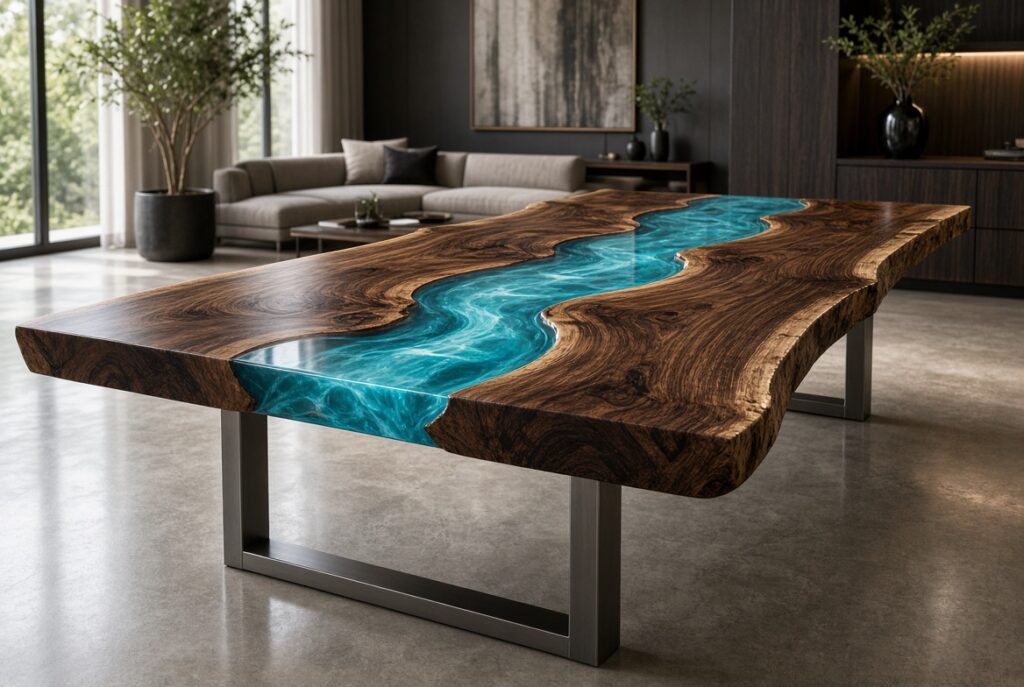
River tables have become one of the most sought-after pieces of modern furniture in recent years. These eye-catching tables combine the natural beauty of wood with the fluid elegance of epoxy resin, creating a design that looks like a real river flowing through solid timber. Whether you’re a homeowner looking to add a statement piece or a woodworker considering a new project, understanding river tables is essential. In this comprehensive guide, we’ll explore what river tables are, the detailed process of making them, and the key pros and cons of creating your own river tables.
What Are River Tables?
River tables are custom-made furniture pieces that feature two or more slabs of wood with a channel of coloured or clear epoxy resin running between them. Makers pour the resin so it looks like a winding river. It has depth and translucency, and often subtle effects such as metallic pigments or glow-in-the-dark additives. Most river tables use live-edge wood, where the natural, uncut edges of the timber remain visible, enhancing the organic aesthetic.
Popular woods for river tables include walnut, oak, maple, and exotic species like rosewood or zebrawood. Makers usually tint the epoxy “river” blue, turquoise or green. Alternatively, they leave it clear with white highlights so it looks like water. Some advanced river tables incorporate embedded objects such as stones, shells, or LED lighting for extra drama. These tables function as dining tables, coffee tables, desks, or console tables and are prized for their unique, one-of-a-kind appearance. High-end river tables can command prices ranging from several thousand to tens of thousands of pounds or dollars depending on size, materials, and craftsmanship.
The popularity of epoxy river tables stems from the perfect marriage of nature and modern technology. They bring an artistic, almost sculptural quality into everyday living spaces while remaining fully functional.
The Process of Making River Tables
Creating river tables is a multi-step process that requires patience, precision, and the right tools. While professionals produce stunning results, dedicated hobbyists can also learn the craft with practice. Here’s a detailed breakdown of how river tables are typically made.
1. Selecting and Preparing the Wood
The foundation of any great river table is high-quality wood. Craftsmen carefully select kiln-dried slabs that are free of major defects and have interesting grain patterns or live edges. Next, they flatten the slabs with a CNC machine, a planer or hand tools until the surface is perfectly level. Once the slabs are flat, they cut and arrange the wood so the natural edges form the banks of the “river.” Then they measure the gaps between the slabs carefully, because these set the width of the resin channel.
2. Building the Mould
A watertight mould is essential to contain the epoxy. Builders construct a form from melamine board, plywood lined with plastic, or specialised mould materials. Next, they place the wood slabs inside the mould and seal the edges with silicone caulk or tape to stop leaks. The whole assembly must sit perfectly level, because any tilt makes the resin flow unevenly.
3. Preparing and Pouring the Epoxy Resin
First, makers mix epoxy resin designed for deep pours (often called “tabletop” or “casting” epoxy), following the manufacturer’s ratio of resin to hardener. Then they add pigments, dyes or mica powders to create the river colour they want. Many makers use multiple layers or different techniques—such as pouring clear resin first, then adding coloured resin—to achieve realistic depth and movement.
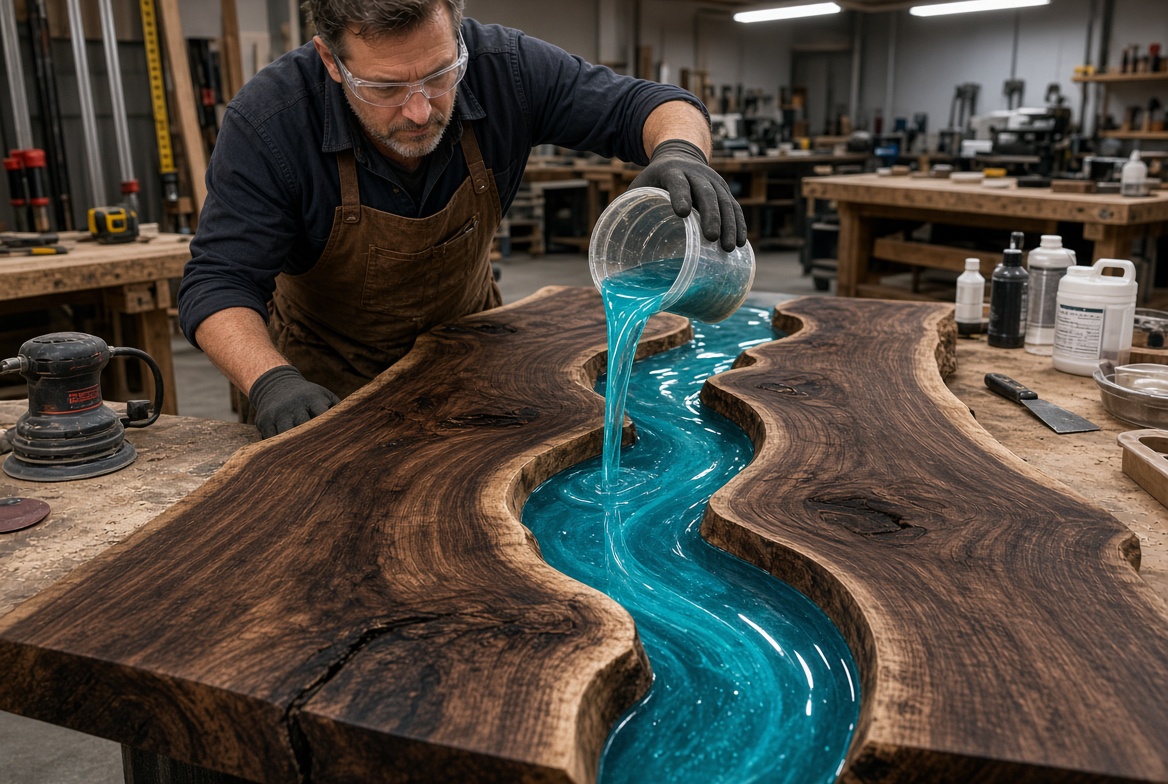
Next, they pour the mixed epoxy slowly into the channel between the slabs. Deep rivers may need several pours over several days. This stops too much heat building up, which can cause cracking or yellowing. After each pour, they leave the resin to cure somewhere with a steady temperature, away from dust and damp. Our guide on how to make an epoxy river table covers each pour stage in more detail.
4. Curing, Demoulding, and Flattening
The resin usually takes 3–7 days to cure fully, depending on the product and the temperature. After that, makers carefully take the table out of the mould. Then they flatten the surface again with a router sled, CNC or wide-belt sander for a perfectly smooth, level top. Finally, they trim away any extra resin or wood.
5. Sanding, Finishing, and Assembly
First, makers sand the whole surface, working from coarse to ultra-fine grits (often up to 3000 grit or higher) for a glass-like polish. Then they add a tough topcoat, such as polyurethane, varnish or more clear epoxy, for protection and shine. Finally, they fit the legs, which are usually metal, wood or a custom design. After that, the river table is ready for a last check and delivery.
Professional makers of river tables often invest in specialised equipment such as vacuum chambers for degassing resin, industrial sanders, and climate-controlled workshops to ensure consistent results. The entire process for a single dining-sized river table can take anywhere from two weeks to several months.
Watch the Process
See a resin table come together from pour to polish on our YouTube channel, @go-bespoke.
The natural-edge slab look that river tables build on owes a great deal to the woodworker George Nakashima, whose free-edge tables made a feature of the tree’s outline long before epoxy rivers appeared.
Top 10 most-watched on YouTube
Video 1 of 10 — one of the most-viewed YouTube videos for “river table”: Transparent River Table with Epoxy by Stone Coat Countertops (3,169,415 views as of 13 October 2026).
Pros of Making River Tables
There are many compelling reasons why woodworkers and furniture makers are drawn to river tables.
Unique Aesthetic Appeal
River tables stand out in any room. No two pieces are identical because of the natural variation in wood grain and the free-flowing nature of the resin. This uniqueness makes river tables highly desirable statement pieces that often become conversation starters.
High Profit Potential
Custom river tables command premium prices. Skilled makers can charge significantly more than for traditional wooden tables, especially when using rare woods or complex resin effects. The market for luxury river tables remains strong among interior designers and affluent homeowners.
Creative Freedom
The process allows endless artistic expression. Makers can experiment with colours, additives, inlays, and shapes. From realistic oceanic blues to abstract metallic rivers, the design possibilities with river tables are virtually limitless.
Skill Development
Working with both wood and epoxy teaches valuable techniques in joinery, finishing, chemistry, and problem-solving. Many woodworkers find the challenge of perfecting river tables highly rewarding.
Durability When Done Correctly
Properly made river tables are extremely durable. High-quality epoxy is resistant to water, heat (within limits), and everyday wear, making these tables practical for daily use.
Cons of Making River Tables
Despite their popularity, river tables come with notable challenges.
High Material and Equipment Costs
Quality epoxy resin, large wood slabs, moulds, and finishing supplies are expensive. Mistakes during pouring can waste hundreds of pounds or dollars in materials. Professional tools such as planers and sanders further increase the investment.
Time-Intensive Process
Creating river tables is not a quick project. Multiple curing stages, extensive sanding, and careful preparation mean even experienced makers spend many hours on a single piece. Rushing any step usually leads to defects.
Technical Difficulty and Learning Curve
Epoxy can be finicky. Issues such as bubbles, incomplete curing, yellowing, or cracking are common for beginners. So you need to control the temperature and humidity closely. On top of that, getting a perfectly flat, polished surface takes real skill.
Potential Health and Safety Concerns
Epoxy resin contains chemicals that can irritate your skin or lungs if you don’t wear the right protective equipment. In addition, dust from sanding wood and cured resin means you need good ventilation and a mask.
Limited Repairability
While durable, damaged river tables can be difficult and costly to repair. Deep scratches in the resin or cracks in the wood often require professional refinishing.
Market Saturation Risk
As more makers enter the market, competition for high-end river tables has increased. Standing out requires exceptional quality, unique designs, or strong marketing.
Conclusion: Are River Tables Worth Making?
River tables represent one of the most visually striking forms of modern furniture. Their blend of natural wood and artistic resin creates pieces that feel both organic and contemporary. The process of making river tables is demanding, requiring careful wood selection, precise mould construction, multi-stage epoxy pours, extensive sanding, and professional finishing. While the results can be breathtaking and highly profitable, the challenges—including high costs, long production times, technical complexity, and safety considerations—should not be underestimated.
For woodworkers who enjoy creative challenges and have the resources to invest in quality materials and equipment, learning to craft river tables can be deeply rewarding. For homeowners, commissioning or purchasing well-made river tables offers a unique way to elevate any interior. Whether you decide to make your own or simply admire the craftsmanship, river tables continue to captivate people with their flowing beauty and timeless appeal.
By understanding both the artistry and the practical realities behind river tables, you can better appreciate why these stunning pieces have earned their place as modern furniture icons.
Want a river table made for your space? Get in touch for a bespoke quote.