Resin Furniture
Updated 16 October 2026

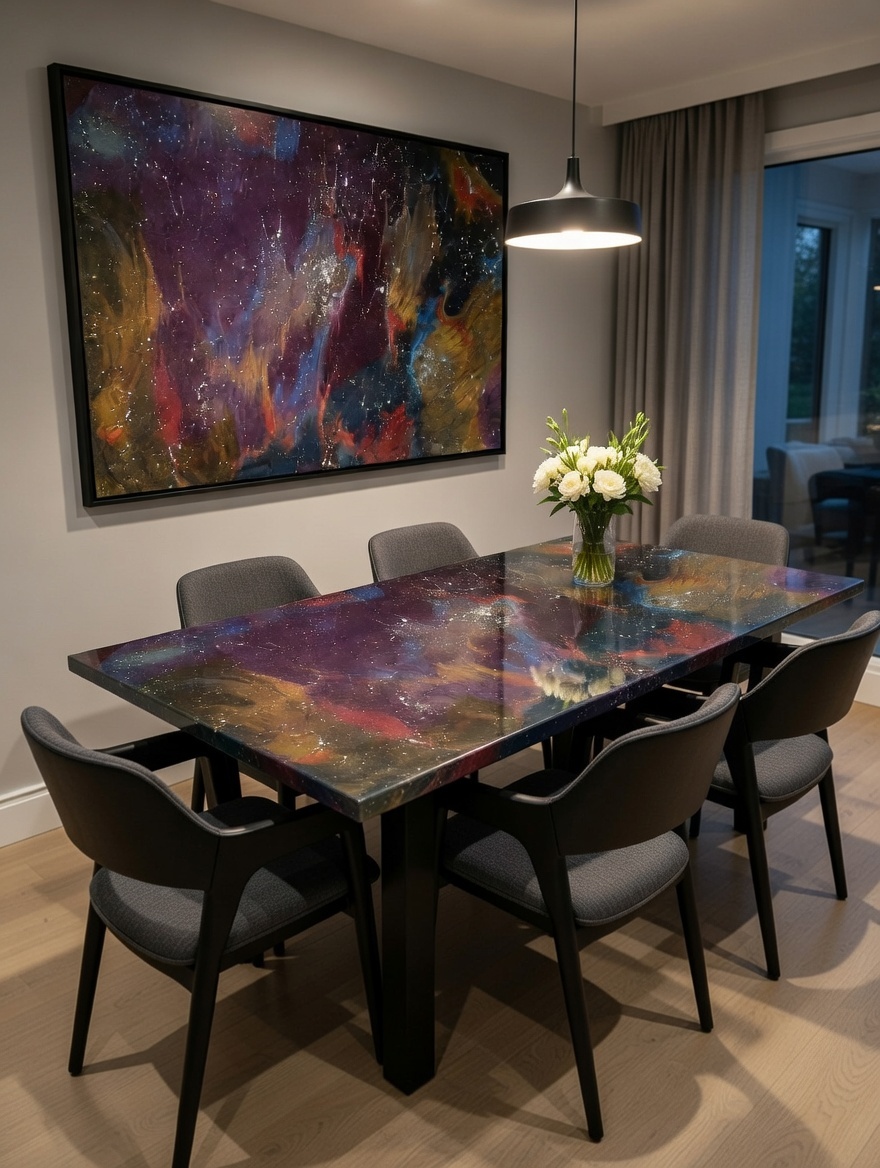
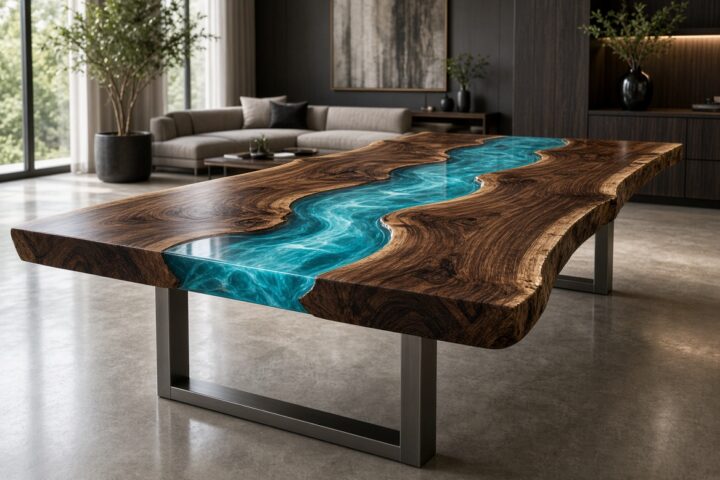
Resin furniture is far more than the river table that made the material famous. Once you understand that cured epoxy can be cast, cut, sanded and polished like a solid, the whole house opens up: shelves that glow at their edges, a headboard that looks like frozen water, a bench with a seam of colour running through it, a lamp that is itself the light source. Each piece is part furniture, part sculpture.
This page looks beyond the epoxy dining table to the wider catalogue of resin pieces, and at the design thinking that turns a functional object into something people stop and stare at.

Thinking of resin furniture as sculpture
A good piece starts with a question: where will the eye go? Resin is unusual among furniture materials because it can be transparent, translucent or opaque, and it can carry colour through its whole depth. That means you are designing in three dimensions, not just on a surface. The edges of a shelf, the underside of a bench and the end grain of a console can all become feature faces.
Light is the other half of the equation. A translucent resin panel near a window changes through the day, glowing amber in late afternoon and cool in the morning. Placing a piece so that light passes through it, rather than simply bouncing off it, is often the difference between pleasant and unforgettable.
Finally, restraint matters. Because resin can do almost anything, the strongest designs usually pick one idea, such as a single seam of colour or a single dramatic void, and let the timber and form do the rest.
The resin furniture catalogue: pieces beyond tables
- Floating shelves: a timber shelf with a resin edge or a resin inlay along its length turns a practical object into a display piece. Translucent resin at the front edge catches light from above and seems to glow.
- Console and hall tables: narrow and seen mostly from the front and side, consoles suit bold edges and waterfall ends, and they are a good first statement piece because they use less material than a dining table.
- Headboards: a wall-mounted resin and timber panel behind a bed becomes the focal point of a bedroom. Soft, sleepy colours such as dusky blue, smoke or pale sand suit the space, and a gentle backlight adds a calm glow at night.
- Benches: a solid slab bench with a resin channel works in hallways, at the foot of a bed or alongside a dining table. Benches take real loads, so timber thickness and a strong base are essential.
- Stools and side seats: small, chunky cast forms, sometimes made entirely of resin with timber offcuts suspended inside, make playful accent pieces.
- Lamps: a resin block on a timber base, lit from below, becomes both object and light. These are popular as gifts and bedside pieces.
- Wall panels: large resin and timber artworks hung like paintings, sometimes lit from behind, bridge the gap between furniture and art.
- Countertops and vanity tops: kitchen worktops, bathroom vanities and window seats can all take a resin surface or inlay, provided the resin suits the heat and moisture of the room. An epoxy bar top is another popular choice for home and commercial bars.
Matching the piece to the room
Every room asks something different of resin furniture. A hallway console needs to be slim and robust because it gets brushed past with bags and coats. A bedroom headboard needs no structural strength but rewards softness and gentle light. A kitchen counter must cope with heat, knives, water and cleaning sprays, so it needs a carefully chosen resin and sensible habits such as trivets and chopping boards. In the living room, an epoxy resin coffee table is usually the first piece people choose.
Scale is easy to misjudge. Resin pieces carry a lot of visual weight because of their gloss and colour, so a piece that seems modest in the workshop can dominate a small room. Mocking up the footprint with masking tape on the floor or a cardboard template on the wall is a simple way to check proportions before committing. This works especially well for a resin coffee table, where proportion relative to the sofa matters.
Practical considerations for resin furniture
- Weight: cured resin is dense. Wall-mounted shelves and headboards need fixings into studs or masonry, never just plasterboard plugs.
- Sunlight: clear and pale resins can mellow in strong sunlight over time. Pieces near south-facing windows benefit from resins with UV stabilisers and thoughtful placement.
- Heat: resin softens under sustained heat, so lamps should use low-heat LED sources and counters need trivets for hot pans.
- Movement: timber continues to expand and shrink with humidity, so fixings and frames should allow a little movement.
- Electrics: lit pieces that run from the mains should be wired or checked by a qualified electrician, with low-voltage LEDs inside the piece wherever possible.
Commissioning or making your own piece
Small items such as a lamp, a shelf edge or a stool are realistic first projects for a careful maker. Larger pieces such as headboards, benches and counters involve heavy timber, big pours and precise flattening, which is why many people commission them as custom epoxy furniture instead. If you make your own, work in a ventilated space, wear nitrile gloves, eye protection and a respirator with organic-vapour cartridges, and keep the workshop at the temperature your resin specifies.
If you commission, bring photos of the room, measurements and a sense of the mood you are after. A maker can then suggest timber, colour and form that suit the space rather than simply copying an image from the internet.
For background on the materials themselves, Wikipedia’s overview of synthetic resins explains how epoxies, polyesters and other resin families differ in chemistry, curing and typical uses, along with their main advantages and drawbacks.
Frequently asked questions
Is resin furniture strong enough to sit on?
Yes, when it is designed for it. Benches and stools rely on thick timber, a sound base and well-cured resin. Thin decorative resin sections are not load-bearing, so structure should come from the frame and timber.
Can a resin headboard or wall panel be lit?
It can. Low-voltage LED strips behind or within the panel create a soft glow. Keep drivers accessible and have any mains connection installed by a qualified electrician.
What is the easiest resin furniture piece to start with?
A floating shelf with a resin edge or a small lamp block. Both use modest amounts of resin and teach you casting, flattening and polishing without huge risk.
Watch resin pieces being made
See how timber and resin become finished pieces on the Go Bespoke YouTube channel, @go-bespoke, where we share our lit and unlit builds.
Top 10 most-watched on YouTube
Video 1 of 10 — one of the most-viewed YouTube videos for “resin furniture”: Resin Table Build by Blacktail Studio (9,496,053 views as of 13 October 2026).
Dreaming of a resin headboard, shelf or bench? Get in touch for a bespoke quote.