Live Edge Slabs: Species, Drying & What to Look For
A good slab is the starting point for every table, shelf or counter that keeps the natural outline of the tree. Live edge slabs are cut straight through the log, so each one carries the bark line, the grain pattern and sometimes the cracks and knots of a single tree. That character is what makes them beautiful, but it also means two boards with the same species name can behave very differently once they come into a warm house. This guide explains the common species, how drying works, what moisture content to aim for, which defects matter and how slabs are flattened before they become furniture.
If you are new to the material, our live edge wood hub covers the bigger picture, from sourcing to finishing. Here we focus on the raw slab itself and how to judge one before you spend money on it.
What makes a good live edge slab?
A live edge slab of wood is simply a plank sawn from a log with one or both natural edges left on. Most are “through and through” cuts, where the log is sliced from top to bottom in parallel boards. The widest boards come from the centre of the log, but those centre boards contain the pith, which is the most likely part to split as the timber dries. Boards cut either side of the pith are usually more stable, while crotch sections (where a trunk forks) give the most dramatic feathered figure but are the least predictable.
When you look at any live edge wood slab, judge it on four things:
- Drying and moisture content – the single biggest factor in whether it stays flat.
- Species and figure – colour, hardness and how the grain will look under a finish.
- Defects – cracks, rot, insect damage, bark and the pith.
- Size and thickness – enough material left after flattening for your project.
Popular species for slab work
Most UK makers work with native hardwoods, with walnut imported from Europe or North America. The table below summarises how the common choices compare.
| Species | Colour and figure | Working notes | Typical uses |
|---|---|---|---|
| Walnut | Chocolate heartwood, pale sapwood, rich figure | Stable, machines and finishes beautifully | Dining, coffee and resin tables |
| Oak | Golden brown, strong grain, ray fleck on quartered faces | Hard, slow to dry; tannins react with iron and water | Dining tables, mantels, shelves |
| Elm | Warm brown with wild, interlocked grain | Prone to movement; dry carefully | Statement tables, benches |
| Ash | Pale cream, straight open grain | Hard and tough, takes stain well | Modern Scandi-style furniture |
| Sycamore and maple | Very pale, sometimes rippled | Can discolour if dried slowly | Light interiors, countertops |
| Cedar of Lebanon and yew | Aromatic, orange to pinkish tones | Softer (cedar) or very dense (yew); lots of knots | Shelves, small tables, accents |
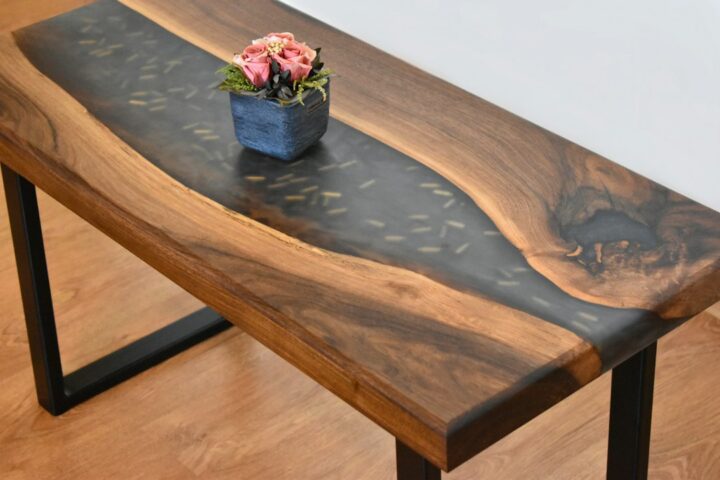
Walnut is the classic choice for resin work, which is why we have a dedicated walnut epoxy table page. Oak is the most widely available native hardwood in Britain and makes a superb live edge dining table if it has been properly dried.
How to identify live edge slab species
Sellers sometimes label wood loosely, so it helps to check for yourself. Look at the end grain with a sharp cut and a hand lens: oak shows large pores and distinct rays, ash has prominent rings of large pores without the rays, and walnut, maple and sycamore have small, evenly spread pores. Weight, smell (oak smells sharp and vinegary, cedar sweet) and the sapwood-to-heartwood contrast all give clues. If in doubt, ask the supplier where and when the tree was felled.
Kiln dried vs air dried slabs
Freshly felled timber can be more than half water by weight. As it dries it shrinks, and because wood shrinks roughly twice as much around the growth rings as it does across them, uneven drying causes cupping, twisting and splits. There are two main routes to getting a slab ready for indoor use.
Air drying
Slabs are stacked outdoors under cover with spacer sticks (“stickers”) between each board so air can flow. The old rule of thumb is about one year per inch (25 mm) of thickness, but in the British climate air drying only brings timber down to roughly the moisture content of the outdoor air, typically in the mid to high teens per cent. That is too wet for a centrally heated home.
Kiln drying
Kiln dried live edge slabs have been finished off in a controlled chamber that raises temperature and lowers humidity gradually. A good kiln schedule brings hardwood down to the right indoor level with less risk of hidden internal stress. Many suppliers air dry first and then kiln dry, which is gentler on thick boards. Kiln drying also kills insects and their larvae, which matters if a slab still has sapwood or bark.
Moisture content: the number that matters
For furniture used indoors in the UK, aim for slab moisture content of typically 8–12%, with the lower end better for rooms with underfloor heating or a wood burner. Check it yourself with a pin moisture meter, taking readings at several points along the slab and on both faces. A reading from a fresh cut a little way in from the end is more reliable than the dry surface.
- Above 15%: not ready for indoor furniture; expect movement and cracks.
- 12–15%: borderline; leave it to acclimatise indoors for several weeks and recheck.
- 8–12%: ready to flatten and build with.
Even a dry slab should rest in the room where it will be worked for a couple of weeks before flattening, so it can settle to the local humidity. This is especially important before any resin pour, because trapped moisture can cause bubbles and poor adhesion; our guide to choosing epoxy for a river table explains why.
Defects to look for
Not every flaw is a deal breaker. Plenty of character can be stabilised, and resin is often used to make a feature of it. What you need to know is which defects are cosmetic and which threaten the slab’s strength.
- End checks: small splits at the ends are normal and are usually trimmed off. Allow extra length when buying.
- Through cracks and the pith: long cracks running along the pith can keep opening. They can be stabilised with butterfly keys or filled with resin, but factor that work in.
- Spalting and soft rot: dark zone lines look striking, but press the wood with a thumbnail. Soft, punky areas need consolidating with thin epoxy wood filler or cutting away.
- Insect holes: small pinholes may be old and harmless; fresh powdery dust (frass) means active insects and the slab needs kiln treatment.
- Loose bark: bark usually comes away as wood dries. Most makers remove it and clean back to the cambium layer.
- Twist and cup: sight along the slab. Heavy distortion means losing a lot of thickness during flattening.
Flattening and preparing a slab
Few slabs are wide enough to fit through a planer, so most are flattened with a router sled: a router riding on a carriage that slides over two level rails, taking shallow passes across the whole surface. Flatten one face, flip the slab, then do the other side. Expect to lose several millimetres of thickness per side on a slab that has cupped, which is why buying thicker than your target is wise; a 50 mm rough board might finish at around 40 mm.
After flattening, fill cracks and voids, then sand through the grits (typically 80, 120, 180 and 240) before finishing. If the slab is going into a resin table, seal the surfaces first with a thin coat as explained in our guide to sealing wood before epoxy, and follow the build sequence in how to make a live edge table.
Buying live edge slabs: practical tips
Prices vary widely with species, width and figure. As a broad guide, smaller shelf and coffee-table slabs typically cost from around £100–£400 ($130–$500), while wide, dry dining-length boards in walnut or figured oak typically run well into four figures. Before you pay:
- Ask how and for how long the timber was dried, and whether it was kiln finished.
- Bring a moisture meter or ask the seller to take readings in front of you.
- Measure the usable width and length after allowing for end checks and wane.
- Check both faces and the underside for hidden cracks and rot.
- Plan transport: a 2 m oak slab can weigh far more than you expect.
Once you have a sound board, browse finished pieces for inspiration on our live edge table guide and the live edge epoxy table page.
For a deeper look at the science, Wikipedia’s overview of wood drying and seasoning explains air and kiln methods, and the USDA Forest Products Laboratory’s Wood Handbook covers moisture content, shrinkage and species properties in detail.
Watch it being made
See one of our tables come together in the workshop: a nebula resin top with fibre optic stars, from the first pour to the lights going on.
Resin art nebula resin table with fibre optic art. More builds on the Go Bespoke YouTube channel.
Frequently asked questions
How long do live edge slabs take to dry?
Air drying typically takes around a year per 25 mm of thickness, and still leaves the wood too wet for heated homes in the UK. Kiln drying shortens the final stage to weeks, depending on species and thickness.
What moisture content should a live edge slab be?
For indoor furniture, typically 8–12%. Check with a pin meter at several points and let the slab acclimatise in the room before working it.
Are kiln dried live edge slabs better than air dried?
For indoor use, yes, provided the kiln schedule was gentle. Kiln drying reaches a lower, more consistent moisture content and kills insects. Air drying followed by kiln finishing is a good combination for thick boards.
Can you use a slab with cracks?
Usually, yes. Stable cracks can be filled with resin or held with butterfly keys. Avoid slabs with long, still-opening cracks through the pith unless you plan to cut them apart.
Which wood is best for a live edge slab table?
Walnut and oak are the most popular because they are hard, stable once dry and finish well. Elm and spalted woods offer more drama but need more care during drying and stabilising.
Have a slab you love but no time to turn it into furniture? Talk to us about a bespoke commission and we can build a table around it.