Live Edge Table: How to Choose the Right Slab Table
Updated 16 October 2026
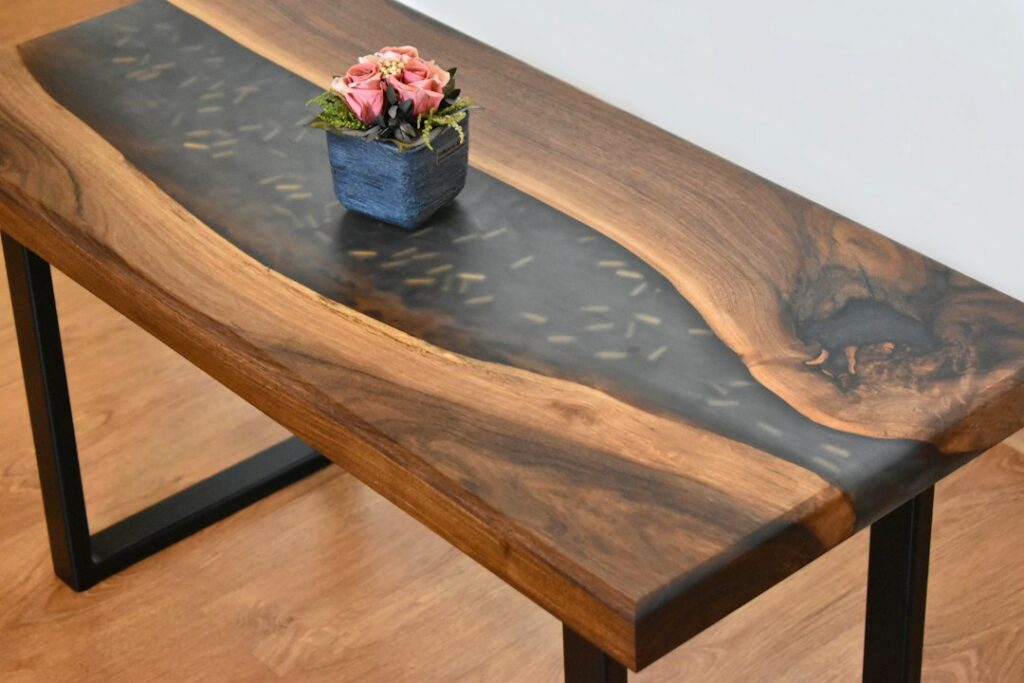
A live edge table keeps the natural outline of the tree along one or both sides of the top, so no two are ever the same. That individuality is the whole appeal, but it also means quality varies enormously. Two slab tops that look similar in a photo can differ hugely in how well the timber was dried, how cracks were stabilised and how the base was engineered. This buyer’s guide explains the main types, what to check before you buy or commission one, and what really drives the price.
For background on species, slab grading and drying, start with our live edge wood hub. Here we focus on the finished furniture.
Types of live edge tables
Solid slab tables
A single wide slab, or two bookmatched boards joined down the middle, with the waney edges left on the outside. This is the purest form and shows off the full figure of the tree. Wide single slabs from large trees are scarce, which makes them the most expensive option.
River and resin tables
Two slabs are set with their natural edges facing inward and the gap filled with tinted or clear epoxy, creating a “river”. It allows narrower, more affordable slabs to make a wide top. Our river table page shows the style, and live edge epoxy tables covers the wider family of resin-and-wood designs.
Dining, coffee, console and desk tables
The same principles apply at every size. Dining tops are typically 40–50 mm thick to stay flat over long spans; see our guide to choosing a live edge dining table. Coffee tables are often cut from thicker, shorter slabs or crotch sections with dramatic figure, and you can browse ideas on our resin coffee table page. Consoles and desks often use narrower offcuts with one live edge and one straight edge against the wall.
Popular timbers for slab tables
| Species | Look | Hardness and use | Notes |
|---|---|---|---|
| Walnut | Rich chocolate heartwood, creamy sapwood | Medium-hard, excellent for dining | Classic choice; pairs well with black or clear resin |
| Oak | Pale to mid brown, strong grain, medullary rays | Hard and durable | Widely available in the UK; tannins can stain with iron |
| Elm | Wild, interlocked grain, warm tones | Tough, resists splitting | Highly figured; can move more as it dries |
| Ash | Light, straight grain | Hard, shock-resistant | Good modern Scandi look |
| Spalted beech or maple | Dark zone lines from fungal decay | Can be soft in places | Usually needs epoxy stabilising |
Walnut is so popular for this style that we have a dedicated walnut epoxy table page.
Quality checks before you buy
Moisture content
This is the single most important factor and the hardest to see. Slabs that have not been dried properly keep shrinking indoors, which causes cupping, twisting and new cracks once the table is in a centrally heated room. For indoor furniture in the UK, timber is typically dried to around 8–12% moisture content. Ask the maker how the slab was dried (air dried then kiln dried is common) and what it measured before finishing. A reputable maker will tell you.
Cracks, checks and voids
Some end checks and natural splits are normal and add character, but they must be stabilised. Look for:
- Cracks filled with epoxy that is flush, smooth and free of bubbles.
- Butterfly keys (bow-tie inlays) across larger splits to stop them travelling.
- No open cracks running into the underside where they could spread unseen.
Bark
Most makers remove the bark and keep the shape of the cambium layer beneath, because bark tends to loosen and drop off as the wood dries. If bark is kept, it should be firmly consolidated with a penetrating resin. Loose bark is a sign of a rushed job.
Flatness and thickness
Lay a straight edge across the top in several directions. It should be flat, without rocking. Check the thickness is consistent, and that the slab has been flattened on both faces, not just the top.
Finish
Common finishes are hardwax oil (natural feel, easily repaired), lacquer, and epoxy flood coats (glassy, highly protective). The underside should be sealed as well as the top, so both faces take on and lose moisture evenly. Our guide to wood epoxy explains how epoxy is used to fill and seal slabs.
Base and fixings
Solid wood moves across its width with the seasons. A good base allows for that movement using slotted holes or figure-eight fasteners rather than rigidly screwing the top down. Steel bases should be powder-coated and sized so the top overhangs comfortably without tipping.
What drives the price?
Price ranges vary widely, so treat any figures as broad guides only. As a rough indication, small coffee or side tables typically start in the hundreds of pounds, while large single-slab or resin dining tables commonly run into several thousand (roughly £1,500–£6,000+, or $2,000–$8,000+). The main drivers are:
- Slab width and rarity: very wide single slabs are scarce and command a premium.
- Species and figure: walnut, burr and crotch figure cost more than plain grain.
- Drying time: properly dried thick slabs take years of air drying or careful kilning.
- Resin volume: river tables use a lot of deep pour epoxy, which is a significant cost.
- Labour and finish: flattening, crack repair, sanding through the grits and finishing take many hours.
- Base: bespoke steel or timber bases add cost over standard legs.
If you are comparing ready-made pieces, our guide to river tables for sale explains what to ask sellers.
How wood movement affects your table
Wood swells and shrinks with humidity mostly across the grain, not along it. A 900 mm wide top can move several millimetres between a damp autumn and a dry, heated winter. That is why good makers dry slabs carefully, seal all faces and use fixings that allow movement. If you want to understand the science behind seasoning and moisture content, Wikipedia’s overview of wood drying explains air drying, kiln drying and why moisture content matters.
Caring for live edge wood tables
- Keep the table away from radiators, underfloor heating hot spots and direct sun.
- Use coasters and trivets; oil finishes mark more easily with heat and water than epoxy.
- Wipe with a damp cloth and mild soap, then dry. Avoid silicone sprays and harsh cleaners.
- Refresh oil finishes once or twice a year; buff epoxy tops with a polishing compound if they dull.
Watch it being made
See one of our tables come together in the workshop: a nebula resin top with fibre optic stars, from the first pour to the lights going on.
Resin art nebula resin table with fibre optic art. More builds on the Go Bespoke YouTube channel.
Frequently asked questions
Are live edge tables durable?
Yes, if the slab was properly dried, cracks were stabilised and the finish suits the use. Hardwoods such as oak and walnut handle daily family use well.
Why do live edge wood tables crack?
Usually because the slab was not dried enough before it was made into furniture, or because it sits near a heat source. Stabilised cracks and butterfly keys help stop movement spreading.
Should the bark be left on?
Most makers remove it because bark loosens as timber dries. If you want it kept, it needs to be consolidated with resin.
How thick should a live edge table top be?
Dining tops are usually around 40–50 mm finished; coffee and side tables can be thicker for visual weight. Thinner tops over long spans may need steel stiffeners underneath.
Can I make my own?
Yes, with access to a dried slab, a router flattening jig and plenty of sanding time. Our step-by-step guide on making a slab table yourself covers the process.
Prefer a piece built around your room and your choice of timber? Get in touch about a bespoke commission.