Live Edge Shelves: 25 Ideas for Kitchens & Living Rooms
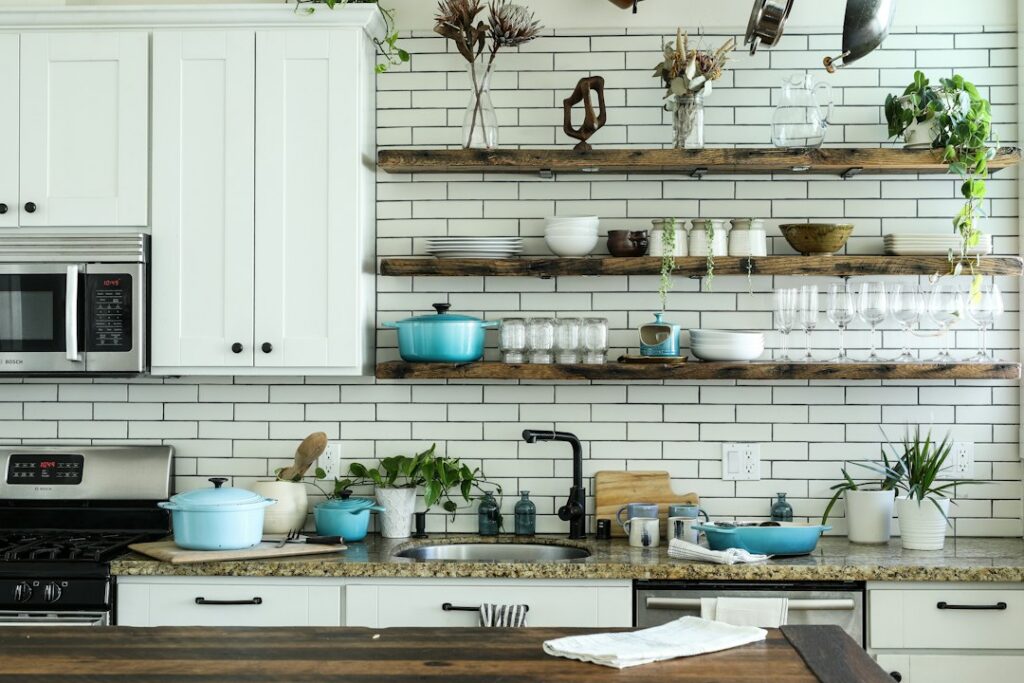
Live edge shelves bring the outdoors indoors in the simplest possible way. A single board with its natural bark line intact turns a plain wall into a feature, adds warmth to a white kitchen and gives books, plants and ceramics a backdrop that no flat-pack shelf can match. Because every slab is different, no two shelves are ever the same.
This page collects 25 ideas for live edge shelves, grouped by room, with notes on timber choice, sizing and styling. If you are new to working with natural-edged timber, our live edge wood hub explains what a live edge is and how slabs are cut and dried.
Before you choose: what makes a good live edge shelf
A few practical points shape every idea below:
- Thickness: most live edge wood shelves are typically 30–50 mm thick. Thinner boards look elegant but can sag over long spans; thicker boards look substantial and suit floating brackets.
- Depth: 180–250 mm suits books and display pieces; 250–300 mm suits kitchen crockery. Because the live edge wanders, measure depth at the narrowest point.
- Dryness: use timber dried for indoor use. A wet board can twist and cup on the wall within months. Our guide to live edge slabs covers moisture content and buying.
- Bark: loose bark usually falls off eventually. Most makers remove it and clean the edge, or stabilise it with a penetrating sealer.
Live edge kitchen shelves: 7 ideas
1. Open shelving in place of wall units
Swap one run of wall cupboards for two or three live edge kitchen shelves. Oak is the go-to choice: it is hard-wearing, its honey tone suits both painted and wooden cabinets, and it copes well with the occasional splash once sealed.
2. A single shelf over the range or hob
A thick shelf above the cooker frames the extractor area and holds oils and spice jars. Keep it well clear of the heat zone and follow the cooker manufacturer’s clearance guidance.
3. Coffee station shelf
A short 600–800 mm shelf above a coffee machine holds mugs, a grinder and jars of beans, making a small corner into a feature.
4. Window-flanking shelves
Two matching live edge shelves either side of a kitchen window balance the wall and make good homes for herbs and cookbooks.
5. Plate rack shelf
Rout a shallow groove 50–60 mm from the back wall so plates can stand upright. It shows off a dinner service and keeps it to hand.
6. Shelf with hanging rail
Fix a slim brass or black steel rail underneath to hang mugs, utensils or tea towels, doubling the storage from one board.
7. Bookmatched pair
Two shelves cut from consecutive boards of the same log mirror each other’s grain. It is a quiet detail that people notice.
Living room live edge shelves: 6 ideas
8. Alcove shelves either side of a chimney breast
The classic British alcove gets a natural update with stacked live edge shelves. Leave the live edge facing out and run the straight edge against the back wall.
9. Floating media shelf
A long, thick shelf under a wall-mounted television holds a soundbar and a few objects, and hides cables behind the board.
10. Staggered gallery wall
Short shelves of different lengths, staggered at different heights, turn into a gallery for frames, pottery and plants.
11. Book ledge
A narrow 120–150 mm shelf with a small lip is perfect for displaying books face-out or leaning artwork.
12. Shelf over a sofa
A single long board above the sofa holds framed prints. Keep it high enough that nobody bumps their head when standing up, and avoid heavy items.
13. Shelves matched to a coffee table
Choosing the same species as your live edge coffee table ties the room together without looking like a set.
Live edge corner shelves: 4 ideas
14. Triangular corner shelves
Cut the back edges at 90 degrees and leave the curved live edge facing the room. A stack of three or four live edge corner shelves makes a dead corner useful.
15. Wraparound corner run
Two shelves meeting in the corner, one butted against the other, create an L-shaped display run.
16. Corner plant stand
Graduated shelves, deeper at the bottom and shallower at the top, give trailing plants room to hang and catch the light.
17. Bathroom corner shelf
A small corner shelf for toiletries works well, but the timber must be sealed thoroughly on all faces, including the ends, to resist humidity.
Bedroom, bathroom and hallway: 4 ideas
18. Floating bedside shelf
A short live edge wall shelf replaces a bedside table, freeing floor space in a small bedroom.
19. Headboard shelf
A long shelf above the headboard holds reading lamps and books. Fix it securely and keep heavy objects off it.
20. Bathroom vanity shelf
A thick slab can act as a countertop for a vessel basin, with a smaller matching shelf above for display. Seal it very well; a hard epoxy coat suits the wettest areas.
21. Hallway shelf with hooks
A shelf with coat hooks below makes a compact entrance drop zone for keys, post and hats.
Statement and resin ideas: 4 ideas
22. Resin-filled crack shelf
Slabs with natural splits or knots can be filled with clear or tinted epoxy, a small taste of the look you see in a wood and resin table. Our guide to epoxy for wood covers filling voids.
23. Mini river shelf
Two narrow boards joined by a thin resin river make a striking feature shelf. Keep the river narrow so the shelf stays strong.
24. Backlit shelf
A slim LED strip in a groove underneath washes light down the wall and highlights the edge profile. Use a low-voltage strip with a proper driver.
25. Offcut shelves from a table build
If you are commissioning a live edge dining table, ask whether offcuts from the same slab could become matching shelves. It is a lovely way to tie a room together.
Choosing wood for live edge shelves
| Species | Look | Good for |
|---|---|---|
| Oak | Honey tone, strong grain | Kitchens, heavy loads, live edge oak shelves |
| Walnut | Dark, rich and elegant | Living rooms, statement shelves |
| Elm | Wild, characterful grain | Feature walls, rustic interiors |
| Ash | Pale and clean | Scandinavian and minimal schemes |
| Cedar or pine | Light, softer and cheaper | Light loads, casual styles |
Hardwoods resist sagging and denting better than softwoods. For any shelf longer than about a metre that will carry books or crockery, a hardwood at least 35–40 mm thick is a safer bet. The same timber choices apply to larger pieces, which we cover in our live edge table guide.
Finishing and mounting, briefly
Seal every face, including the underside and the end grain, so the board absorbs and releases moisture evenly. A hardwax oil gives a natural, matte look; a coat of penetrating sealer stabilises the edge first. See our guide to epoxy sealer for wood for wet areas.
For fixings, hidden floating-shelf rods into solid masonry or studs give the cleanest look; visible steel brackets suit heavier loads and industrial styles. Whatever you choose, use fixings rated for the load and the wall type. Bob Vila’s guide on how to install floating shelves and choose anchors is a helpful primer on studs, plasterboard and anchor ratings.
The style itself has a long history: the Wikipedia article on live edge furniture traces its revival by the woodworker George Nakashima in the mid-twentieth century.
Styling tips for live edge wall shelves
- Leave space. The wood is the feature, so leave a third of each shelf empty.
- Use odd numbers of objects and vary their heights.
- Mix textures: matte ceramics, glass and greenery all contrast well with grain.
- Repeat a species elsewhere in the room, such as a table or picture frame.
- Light it: warm-white lighting brings out the grain far better than cool white.
Watch it being made
See one of our tables come together in the workshop: a nebula resin top with fibre optic stars, from the first pour to the lights going on.
Resin art nebula resin table with fibre optic art. More builds on the Go Bespoke YouTube channel.
Frequently asked questions
How thick should live edge shelves be?
Most live edge shelves are typically 30–50 mm thick. Around 40 mm is a good all-round choice for spans up to about a metre with books or crockery, and it gives floating-shelf rods enough material to grip.
How much weight can a live edge shelf hold?
It depends more on the fixings and wall than on the wood. A thick hardwood shelf on rods or brackets fixed into masonry or studs can carry books and crockery comfortably; plasterboard alone limits the load. Always check the rating of your brackets and anchors.
Should you remove the bark from live edge shelves?
Usually, yes. Bark tends to loosen as the board dries and can harbour insects. Most makers peel it, brush the edge clean and seal it. Firmly attached bark can be kept if it is stabilised with a penetrating sealer.
Can live edge shelves be used in a kitchen?
Yes. Choose a hard, stable species such as oak, seal all faces thoroughly, and keep shelves away from direct heat over the hob. Wipe spills promptly and re-oil periodically.
How do you stop a live edge shelf warping?
Start with properly dried timber, let it acclimatise in the room for a week or two, and seal every face evenly, including the back and underside. Uneven sealing is a common cause of cupping.
Want live edge shelves made from the same slab as a table or other resin furniture? Contact Go Bespoke to discuss a bespoke commission.