Walnut Epoxy Table
Updated 17 October 2026
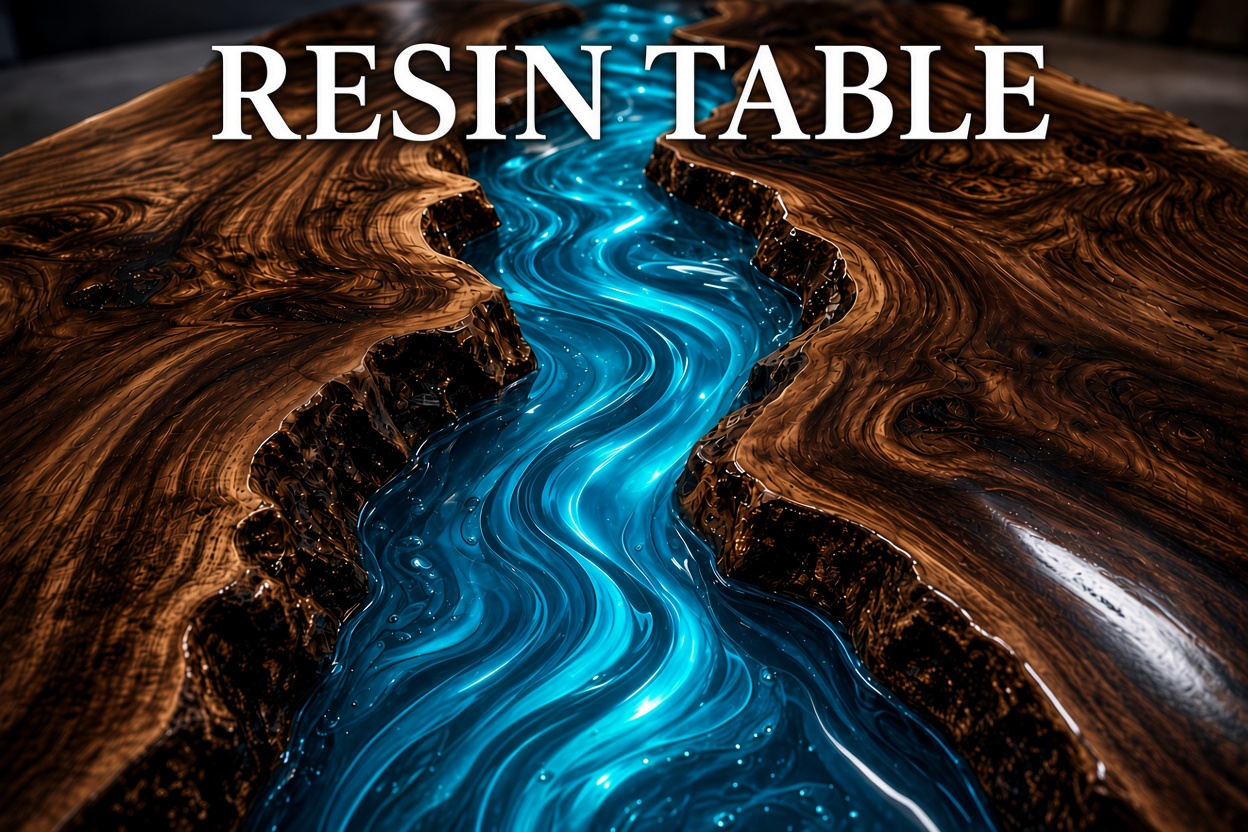
A walnut epoxy table has a warmth that few other timbers can match. The heartwood runs from milk chocolate to deep purple-brown, the grain swirls and ripples under a finish, and the pale sapwood at the edges creates a natural frame for resin. It is no accident that walnut appears in so many of the most admired river tables: the timber does half the design work before the first drop of resin is poured.
This page is about the wood itself. It looks at heartwood and sapwood, the resin colours that suit walnut best, the debate between oiling and epoxy-coating, and why so many makers return to this species again and again.
Heartwood and sapwood in a walnut epoxy table
Every walnut slab has two distinct zones. The heartwood is the darker core of the tree, rich in the natural compounds that give walnut its colour. The sapwood is the outer band, which carried water while the tree was alive, and it is a creamy, pale tan.
The contrast between the two is one of walnut’s great assets. Along a live edge, a stripe of pale sapwood sits between the dark heartwood and the resin, like a beach between land and sea. Some makers love that contrast and keep every millimetre of sapwood. Others trim it back or choose slabs with very little, for a darker, more uniform look.
Walnut colour also varies by source and drying method. Some timber is steamed to even out the colour between heartwood and sapwood, giving a more consistent but slightly muted brown. Air-dried walnut often keeps more purple and red tones. Neither is right or wrong, but it is worth seeing the actual slab before deciding. Drying is explained further in our live edge epoxy table guide.
Resin colours that suit walnut
Walnut’s warm, dark brown pairs well with a surprising range of colours. Some of the most successful combinations include:
- Clear or lightly smoked resin: lets the grain and live edge take centre stage. A faint grey smoke tint adds sophistication.
- Deep blue and teal: blue is the complementary colour to orange-brown, so it makes walnut look even warmer.
- Black: moody and elegant, black resin makes the paler sapwood stand out sharply.
- Metallic gold or bronze: echoes the warm undertones of the wood for a luxurious look.
- Emerald green: rich and unexpected, it gives a jewel-like contrast with the brown heartwood.
- White or pearl: a crisp, modern combination that highlights every curve of the live edge.
When in doubt, hold colour swatches against an offcut of the actual slab in daylight. Walnut can range from almost grey to distinctly red, and the best partner colour depends on which way your piece leans.
Oiling versus epoxy-coating walnut
Once the resin is poured and flattened, there is still the question of how to finish the timber. There are two main schools of thought.
- Hardwax oil or penetrating oil: soaks into the wood, deepens the colour and leaves a natural, tactile surface you can feel the grain through. It is easy to repair and refresh, but it offers less resistance to spills and hot cups. The resin areas are usually polished separately to a gloss or satin sheen.
- Full epoxy flood coat: seals the walnut and resin under one continuous glossy layer. It gives superb spill protection and an intense, wet look that makes walnut glow. The trade-off is a more plastic feel and harder repairs if the coat is damaged.
Many people choose by use. A dining table that sees daily family life may benefit from a protective coat, while a coffee table or desk that is admired more than it is splashed often looks and feels more beautiful with oil. Oil finishing is covered step by step in how to make a live edge table.
Why makers love walnut
Beyond its looks, walnut is a pleasure to work. It machines cleanly, sands well and takes a finish beautifully. It is stable once properly dried, which matters when it is bonded to resin that does not move with humidity, the central challenge of any wood and resin table. It is heavy enough to feel substantial without being as brutally dense as some exotic hardwoods.
Walnut also has a long tradition in fine furniture, so a walnut epoxy table bridges the gap between classic cabinetmaking and contemporary resin art. It can sit comfortably in a period home as well as in a modern apartment.
There is also the way walnut ages. Over years of use and gentle light, its surface tends to soften into a mellow, golden brown, and the grain develops a quiet lustre that many owners prefer to the day it was finished. Resin, by contrast, holds its colour and shine, so the two materials keep a lively conversation going as the table matures. That sense of a piece improving with time is a big part of why walnut feels so right for an heirloom.
Choosing a slab for a walnut epoxy table
Look for a slab that is properly dried and stable, with character you love. Natural features such as crotch figure where branches divided, curly grain or burr clusters make each piece unique. Small cracks and voids are not necessarily faults, since resin can fill them, as on any live edge resin table, but the timber should be sound overall. Bookmatched pairs, cut consecutively from the same log, create a mirrored river with beautiful symmetry. Choosing a pair is a highlight of commissioning a custom live edge resin table.
Working safely with walnut and resin
Walnut dust can irritate the skin and airways, so wear a dust mask or respirator when sanding and use extraction. When mixing and pouring resin, use nitrile gloves, eye protection and an organic-vapour respirator, and keep the workshop well ventilated.
To learn more about the timber itself, Purdue University’s profile of black walnut covers its strength, decay resistance, dark heartwood and traditional uses in fine furniture, which helps explain why it pairs so well with clear or tinted resin.
Frequently asked questions
Should I keep the sapwood on my walnut epoxy table?
It is a matter of taste. Sapwood creates a striking pale border between the dark heartwood and the resin. Trim it if you prefer a darker, uniform look.
Does walnut change colour over time?
Walnut tends to lighten and warm slightly with exposure to light, moving towards a golden brown. Keeping it out of strong direct sun slows the change.
Is oil or epoxy better for finishing walnut?
Oil gives a natural feel and easy repairs; epoxy gives maximum spill protection and gloss. Choose based on how hard the table will be used.
Watch walnut and resin come together
For more timber and resin builds, visit the Go Bespoke YouTube channel, @go-bespoke, and see how our tables are made from slab to finish.
Top 10 most-watched on YouTube
Video 1 of 10 — one of the most-viewed YouTube videos for “walnut epoxy table”: Amazing Epoxy Table. Combination Epoxy with Stones, Wood and Metal! by Positive couple. Позитивная парочка. (20,213,856 views as of 13 October 2026).
Found a walnut slab you love? Get in touch for a bespoke quote.