Epoxy Paint: How It Works and Best Uses at Home
Updated 14 October 2026
Ordinary emulsion and gloss are fine for living-room walls, but some surfaces need something tougher: a garage floor that sees hot tyres, a shower room that is constantly damp, a steel gate exposed to the weather or a boat hull sitting in water. That is where epoxy paint comes in. Built on the same chemistry as epoxy resin, it cures into a hard, chemical-resistant and water-resistant film that ordinary paints cannot match. This guide explains how it works, the difference between one-part and two-part products, where it performs best around the home and how to apply it for a finish that lasts.
Epoxy paint is most often used on floors, so if that is your project, start with our epoxy floor guide for the bigger picture on prep, systems and lifespan.
What is epoxy paint?
Epoxy paint is a coating that uses epoxy resin as its binder. Like other epoxies, it hardens through a chemical reaction rather than simply drying, which gives it excellent adhesion, hardness and resistance to water, oil and many household chemicals. If you want a refresher on the chemistry, our explainer what is resin covers how thermosetting resins cure.
Compared with a thick floor coating or a pourable resin, it is thinner and applied by brush or roller in coats of a fraction of a millimetre. It is closer to a heavy-duty paint than to a self-levelling resin, which is why it is easier to apply on walls, metal and vertical surfaces.
1K vs 2K: one-part and two-part epoxy paint
| 1K (one-part) epoxy-modified paint | 2K (two part epoxy paint) | |
|---|---|---|
| How it cures | Dries by evaporation; epoxy ester or acrylic-epoxy hybrid | Resin and hardener react chemically after mixing |
| Durability | Good; better than standard paint | Very high hardness, abrasion and chemical resistance |
| Pot life | Unlimited – use straight from the tin | Limited once mixed, often 1–4 hours |
| Ease of use | Easy, similar to normal paint | Needs accurate mixing and timing |
| Best for | Light-traffic floors, walls, metalwork touch-ups | Garage floors, workshops, bathrooms, tanks, marine use |
A 2 part epoxy paint is the true epoxy coating and is what most professionals mean by the term. One-part products are often labelled epoxy-enriched or epoxy-modified and offer a middle ground between ordinary floor paint and full epoxy.
Best uses for epoxy paint at home
Garage and workshop floors
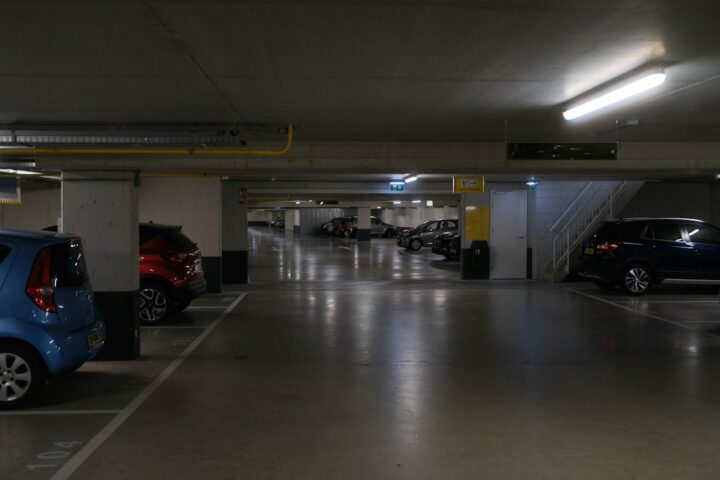
The most popular use. A two-part coating resists oil, petrol drips and road salt, and makes sweeping much easier. Thin paint-on products are best for light domestic use; heavier traffic and hot-tyre pickup call for thicker systems, explained in our epoxy garage floor guide. Concrete must be properly prepared first – see concrete epoxy for testing and profiling.
Bathrooms, showers and wet rooms
Waterproof epoxy paint is used on tiles, shower trays, baths and walls in damp areas because it resists moisture and mould growth better than standard paint. Tile paints based on epoxy can refresh dated tiles, though grout lines need thorough cleaning and the surface must be fully dry before painting.
Metal: gates, railings and machinery
Epoxy primers and paints protect steel against corrosion. On exterior metal, epoxy is commonly used as a primer and covered with a polyurethane topcoat, because epoxy alone can chalk and fade in sunlight. Our notes on UV resistant epoxy resin explain why epoxies discolour outdoors.
Boats and water tanks
Marine epoxy coatings and barrier coats protect hulls from water absorption. Some formulations are approved for potable water tanks; always check the data sheet for drinking-water certification before using a product in contact with water you will drink.
Kitchen worktops and furniture
A thin epoxy coating is sometimes used to refresh laminate worktops, but for a deep, glossy finish most people choose a pourable resin system instead. Our guide to epoxy countertops compares the approaches.
How to apply epoxy paint
What you will need
- The coating itself (and primer, if specified)
- Degreaser, stiff brush, and sander or grinder for preparation
- Short-pile roller (often 6–10 mm nap), brushes for cutting in, and a roller extension
- Mixing paddle and drill for two-part products
- Masking tape and dust sheets
- Nitrile gloves, eye protection and a respirator with organic vapour cartridges
Step 1: Prepare the surface
Preparation decides how long the coating lasts. Remove loose paint, rust, grease and dust. Concrete should be ground or etched to open the surface; tiles and glossy surfaces need sanding to give a key; metal needs rust removal back to sound steel. Repair cracks and holes, then vacuum and wipe down.
Step 2: Check conditions
Most products need a surface and air temperature of at least around 10–15°C, and the surface should be at least 3°C above the dew point to avoid condensation. Concrete must be dry: tape a square of plastic sheet to the floor for 24 hours, and if moisture appears underneath, address it before painting.
Step 3: Mix (two-part products)
Pour the hardener into the base and mix thoroughly with a paddle for the time stated, scraping the sides. Some products need a short induction time before use. Mix only what you can apply within the pot life.
Step 4: Cut in and roll
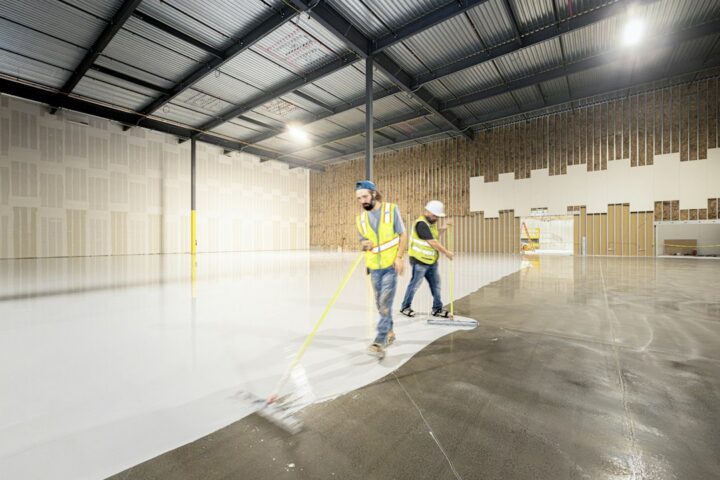
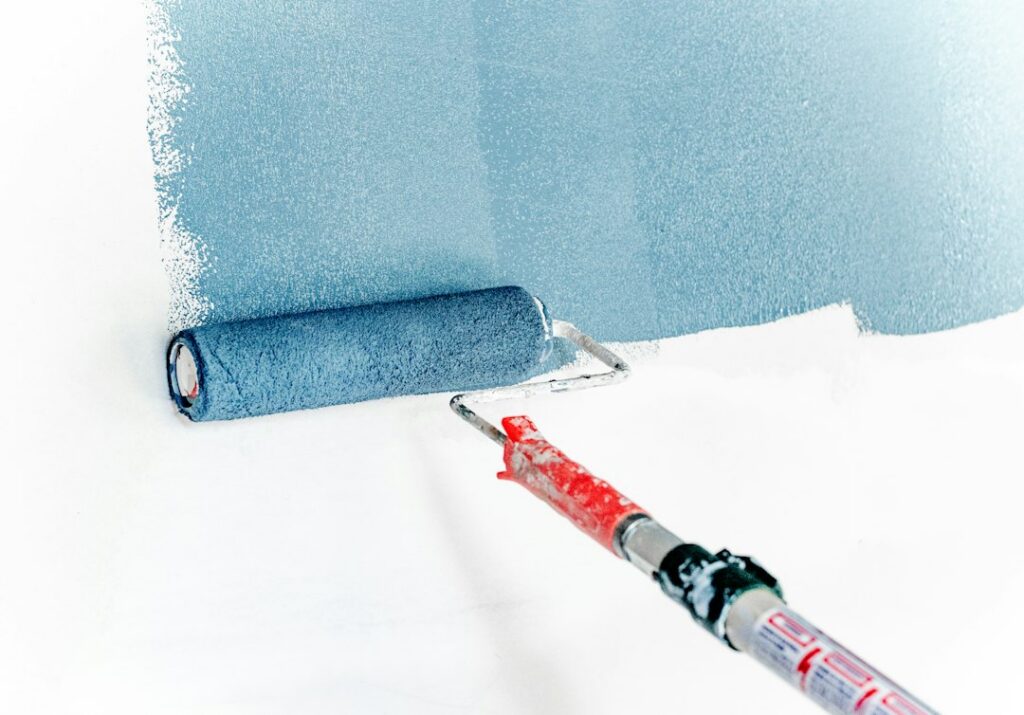
Brush the edges first, then roll in sections of about one square metre, working the paint in a W pattern and finishing with light, parallel passes. Keep a wet edge. Typical coverage is roughly 4–8 square metres per litre per coat, depending on product and surface porosity.
Step 5: Second coat
Apply a second coat within the recoat window shown on the tin – often 12–24 hours. If you miss it, lightly sand the first coat before continuing so the next layer bonds. For floors, an anti-slip additive can be mixed into or broadcast onto the final coat.
Step 6: Cure
Foot traffic is typically possible after 24 hours, light vehicles after about 3–7 days, and full chemical resistance after about 7 days, depending on temperature.
Safety
Two-part products contain reactive chemicals and sometimes solvents. Ventilate thoroughly, wear a respirator with organic vapour cartridges in enclosed spaces such as garages and bathrooms, and wear nitrile gloves and eye protection. Avoid skin contact – epoxy sensitisation can be permanent. Keep the area clear of children, pets and ignition sources until cured, and let unused mixed paint harden before disposal.
Common mistakes to avoid
- Painting over damp concrete, which causes bubbling and peeling.
- Skipping surface preparation on glossy tiles or old paint.
- Mixing a large batch and exceeding the pot life.
- Applying too thickly in one coat, leading to runs and soft areas.
- Using standard epoxy outdoors without a UV-stable topcoat.
- Painting in the cold, which slows the cure and can leave a tacky surface.
Epoxy paint vs epoxy resin coatings
Paint-on epoxy is thin, brushable and economical, ideal for protecting surfaces. Thicker resin systems – flake floors, metallic epoxy finishes and self-levelling coatings – build more depth, durability and decorative effect but cost more and take more skill. For a comparison of heavy-duty systems, see our guide to industrial vs residential epoxy flooring.
Two-part products like these are hazardous until cured, and the European Agency for Safety and Health at Work explains how to work safely with epoxy resins, including skin protection and ventilation for indoor jobs.
Watch it being made
See one of our tables come together in the workshop: a nebula resin top with fibre optic stars, from the first pour to the lights going on.
Resin art nebula resin table with fibre optic art. More builds on the Go Bespoke YouTube channel.
Frequently asked questions
Is epoxy paint waterproof?
Yes. Once cured, a two-part product forms a waterproof, non-porous film, which is why it is used in bathrooms, wet rooms, boats and tanks. Water resistance depends on proper preparation and full cure.
Can you use epoxy paint on walls?
Yes. It is used on walls in bathrooms, kitchens, workshops and commercial spaces where washability and moisture resistance matter. It is usually unnecessary for living areas.
How long does epoxy paint take to dry?
Most products are touch dry in a few hours, can be recoated in about 12–24 hours and take light foot traffic after around 24 hours. Full hardness and chemical resistance typically take about 7 days.
What is the difference between 2 part epoxy paint and regular paint?
Two-part epoxy cures by chemical reaction into a much harder, more chemical-resistant film than regular paint, which dries by evaporation. It is more durable but has a limited pot life and needs careful mixing.
Can epoxy paint be used outside?
It can, but most epoxies chalk and yellow in sunlight. Outdoors, epoxy is best used as a primer or base coat with a UV-stable polyurethane topcoat.
See epoxy in action
For pours, coatings and finishing techniques filmed in the workshop, visit the Go Bespoke YouTube channel, or explore our epoxy floor guide linked above for your next project.