Epoxy Garage Floor: Coatings, Costs & Lifespan Explained
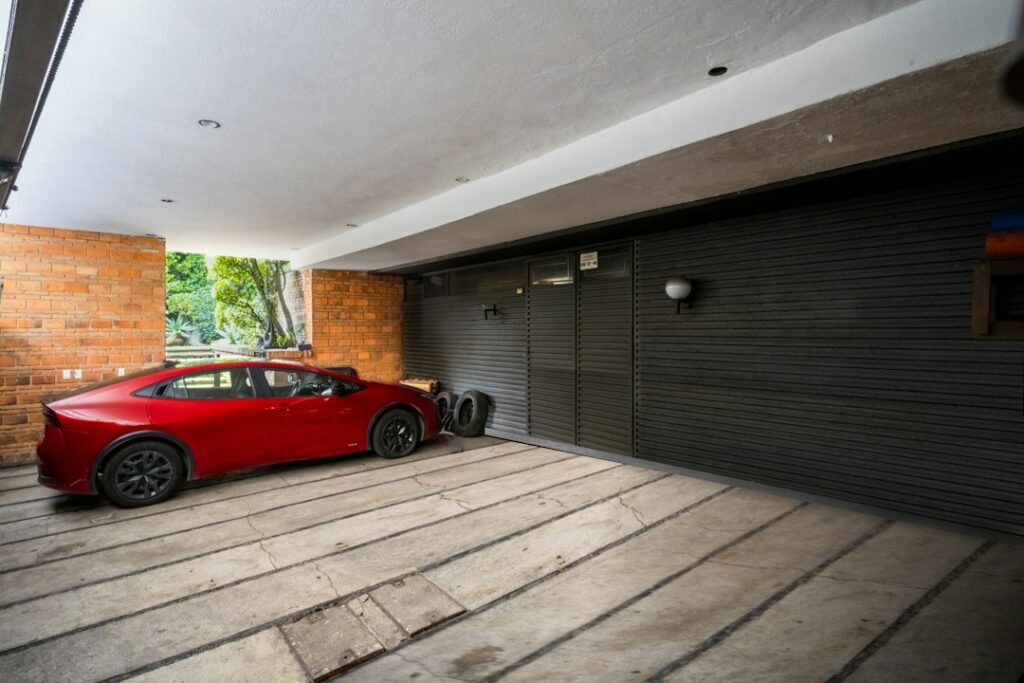
An epoxy garage floor is one of the most satisfying upgrades you can make to a home. Bare concrete sheds dust, soaks up oil and looks permanently grubby; a well-applied garage floor epoxy coating seals it, brightens the whole space and wipes clean in seconds. But garages are also the harshest test an epoxy floor will face, with hot tyres, dropped tools, road salt and winter damp. Choosing the right system matters more here than anywhere else in the house.
This guide focuses on the garage specifically: the main coating systems, flake finishes, why hot-tyre pickup happens, what an epoxy garage floor typically costs per square metre and square foot, and a clear DIY versus professional decision table. For the bigger picture on every room, see our main epoxy floor guide.
Garage floor epoxy systems compared
Products sold for garages vary enormously. The key differences are solids content, thickness and whether there is a protective topcoat.
Water-based epoxy
Water-based garage epoxy is the easiest to apply: low odour, long working time and soap-and-water clean-up. The trade-off is durability. Many are around 40–60% solids, so much of what you roll on evaporates, leaving a thin film. They suit light-use garages, storage areas and dust-proofing, but are the most likely to suffer hot-tyre pickup and wear paths.
Solvent-based epoxy
Solvent-based products penetrate porous concrete well and are often used as primers. They have strong fumes and need excellent ventilation and an organic vapour respirator.
100% solids epoxy
A 100% solids epoxy garage floor coating contains no solvent or water, so the wet thickness you roll on is roughly the dry thickness you get. That means a thicker, harder film, typically 0.25–0.5 mm per coat, with much better resistance to abrasion and tyres. The catch is a short pot life, often 20–40 minutes, so you must work quickly in small batches.
Epoxy base with polyaspartic or polyurethane topcoat
Many professional garage floors use an epoxy base for adhesion and build, then a polyaspartic or polyurethane clear topcoat for UV stability, scratch resistance and chemical resistance. These topcoats cure very fast and are harder for DIYers to apply well, but they help prevent the yellowing that standard epoxy suffers in sunlit garages with the door often open.
| System | Typical film per coat | Durability | Hot-tyre resistance | DIY difficulty |
|---|---|---|---|---|
| Water-based epoxy | 0.05–0.1 mm dry | Light use | Low | Easy |
| Solvent-based epoxy | 0.05–0.15 mm dry | Moderate | Moderate | Moderate (fumes) |
| 100% solids epoxy | 0.25–0.5 mm | High | Good | Moderate (short pot life) |
| Epoxy + polyaspartic topcoat | Base plus clear coat | Very high | Very good | Hard |
Flake finishes for epoxy garage floors
Decorative vinyl flakes (also called chips) are broadcast into the wet base coat, then sealed with a clear topcoat. They are popular in garages for good reasons:
- They hide minor surface imperfections, dust nibs and patched cracks.
- They camouflage dirt and tyre marks between cleans.
- They add texture and grip, especially with a full broadcast.
- They are forgiving for first-timers – a flake floor hides roller marks that would be obvious on a solid colour.
A light broadcast gives a speckled look; a full broadcast covers the base completely and is usually scraped and sealed for a granite-like finish. Plain solid colours or metallic epoxy effects are possible in garages too, but they show every flaw and scratch.
What causes hot-tyre pickup?
Hot-tyre pickup is when the coating lifts or marks where a car parks. After a drive, tyres are warm and soft; as they cool on the floor they contract and grip the surface. If the coating is thin, poorly bonded or not fully cured, the tyre can pull it off the concrete.
To avoid it:
- Grind the slab to an open profile so the coating bonds mechanically, rather than relying on acid etching alone over dense concrete.
- Use a 100% solids system or a professional multi-coat build rather than a single thin coat.
- Let the floor cure fully – typically 5–7 days before parking, longer in a cold garage.
- Use a quality topcoat rated for vehicle traffic.
How to coat a garage floor with epoxy: the short version
- Empty and degrease. Remove everything, scrub oil stains with a concrete degreaser and rinse.
- Test for moisture. Tape plastic sheet to the slab for 24 hours; condensation underneath means damp must be dealt with first.
- Repair. Fill cracks and pits with an epoxy repair compound.
- Profile. Diamond grind with a hired grinder and vacuum, or acid etch as a lesser alternative. Wear an FFP3/P3 dust respirator, goggles and ear protection.
- Prime porous concrete if your system includes a primer.
- Apply the base coat in small mixed batches, cutting in edges then rolling in sections. Our guide to how to use epoxy resin explains mixing ratios and pot life.
- Broadcast flakes while wet, if using.
- Topcoat within the recoat window, with anti-slip additive near the door where water collects.
- Cure at 15–25°C. Keep the garage door closed against dust and insects while tacky.
Garage floors are frequently cold. Below about 10–13°C most epoxies cure slowly and can blush (a greasy, cloudy film). Schedule the job in late spring or early autumn, or heat the space safely beforehand.
How much epoxy for a garage floor?
A single-car garage in the UK is typically around 15–18 m² and a double around 30–36 m² (roughly 160–200 sq ft and 320–400 sq ft). A 100% solids coating covers typically 4–6 m² per litre per coat, so a single garage needs roughly 3–5 litres per coat plus waste. Thin water-based kits cover more per litre but build less film. Use our epoxy quantity guide to check the maths for your space.
Epoxy garage floor cost
These are typical ranges only; slab condition and region change them substantially.
| Option | Typical cost per m² (UK) | Typical cost per sq ft (US) | Typical single garage total |
|---|---|---|---|
| DIY water-based kit | £5–£12 | $0.50–$1.50 | £100–£250 / $150–$350 |
| DIY 100% solids flake kit | £12–£30 | $1.50–$4 | £250–£600 / $350–$900 |
| Professional epoxy flake system | £40–£80 | $4–$9 | £700–£1,500 / $1,200–$2,500 |
| Professional epoxy + polyaspartic | £50–£100 | $5–$12 | £900–£1,800 / $1,500–$3,000 |
On DIY jobs, add grinder hire, diamond tooling, crack filler, rollers, spiked shoes and a respirator.
DIY or pro: a decision table
| Your situation | Our suggestion |
|---|---|
| Single garage, sound dry slab, flake finish | DIY with a 100% solids kit |
| Light use, mainly storage, tight budget | DIY water-based kit |
| Daily car parking, want 10+ years | Professional system with grind prep |
| Damp slab, old coatings, heavy oil contamination | Professional assessment |
| Solid-colour or metallic showroom look | Professional |
| Garage often open to sun | UV-stable topcoat (often pro-installed) |
How long does an epoxy garage floor last?
A properly ground and coated professional system typically lasts 10–20 years in a residential garage. A good DIY 100% solids flake floor typically lasts 5–10 years, while thin water-based coatings may need refreshing within 2–5 years. Sunlight is a factor too: standard epoxy ambers in UV, which is why UV-resistant topcoats are worth it if your garage doubles as a bright workshop.
Maintenance
- Sweep regularly; grit dulls the gloss.
- Mop with warm water and a pH-neutral cleaner.
- Wipe oil and brake fluid promptly.
- Use mats under kickstands and jack stands.
- Recoat with a fresh topcoat when the gloss wears.
For a walkthrough of the job itself, This Old House’s guide on applying an epoxy coating to a garage floor covers degreasing, etching or grinding the concrete, priming, broadcasting flakes and sealing with a topcoat.
Watch it being made
See one of our tables come together in the workshop: a nebula resin top with fibre optic stars, from the first pour to the lights going on.
Resin art nebula resin table with fibre optic art. More builds on the Go Bespoke YouTube channel.
Frequently asked questions
Is epoxy garage flooring worth it?
For most homeowners who use the garage for parking or as a workshop, yes. It resists stains, is easy to clean, brightens the space and protects the concrete.
How long after epoxy can I park on my garage floor?
Typically 5–7 days at normal room temperature, and longer in cold conditions. Parking too early is a major cause of hot-tyre pickup.
Can I epoxy a garage floor myself?
Yes, if the slab is dry and sound and you prepare it thoroughly. A 100% solids flake kit is the best DIY choice for durability.
Why is my epoxy garage floor peeling?
Usually poor preparation (no grinding or etching), moisture coming through the slab, oil contamination, a coating that was too thin, or driving on it before it fully cured.
Is garage floor epoxy slippery?
Glossy epoxy can be slippery when wet. Flakes and an anti-slip aggregate in the topcoat improve grip significantly.
Ready to start?
If you have never worked with two-part resin, read our epoxy resin for beginners guide first and practise mixing a small batch. To see how we handle epoxy in the workshop, from mixing to curing, watch our builds on the Go Bespoke YouTube channel.