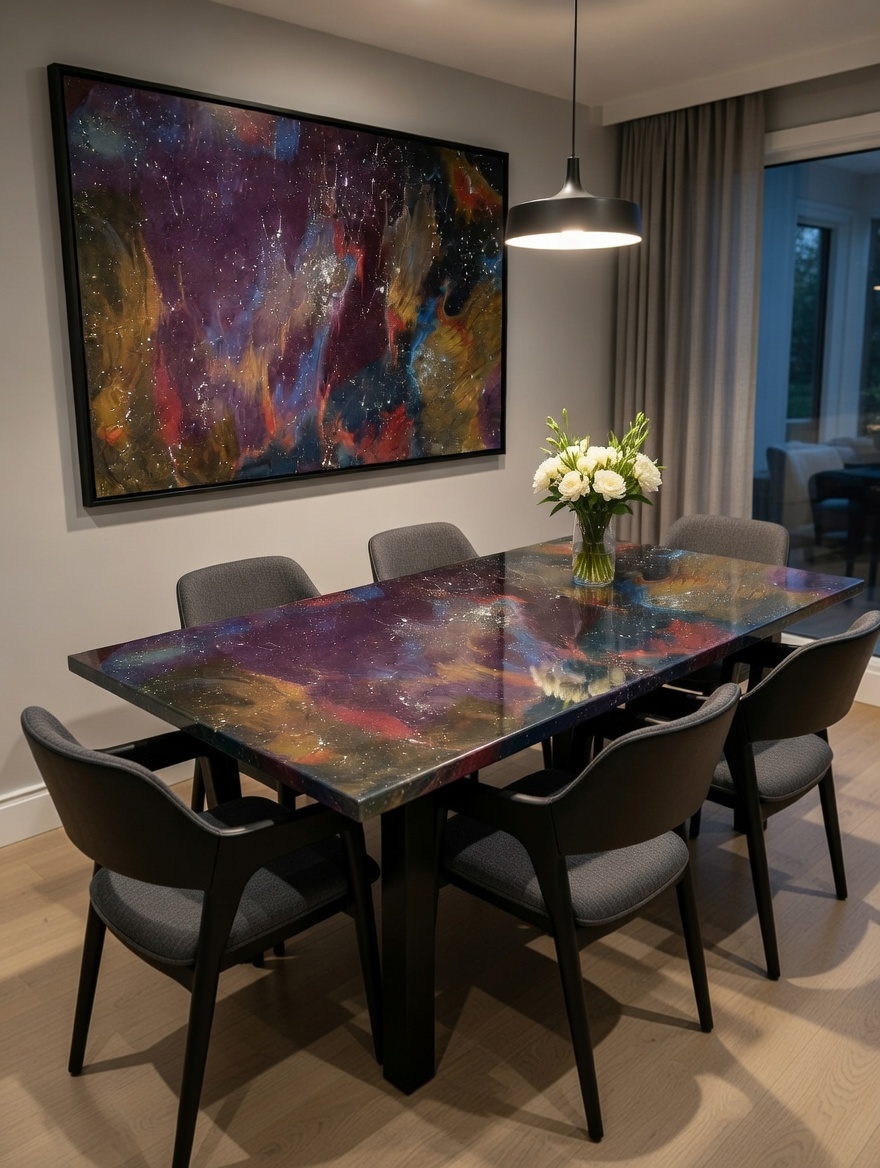
Resin Dining Table UK: Oak, Walnut & Bespoke Options
Updated 17 October 2026
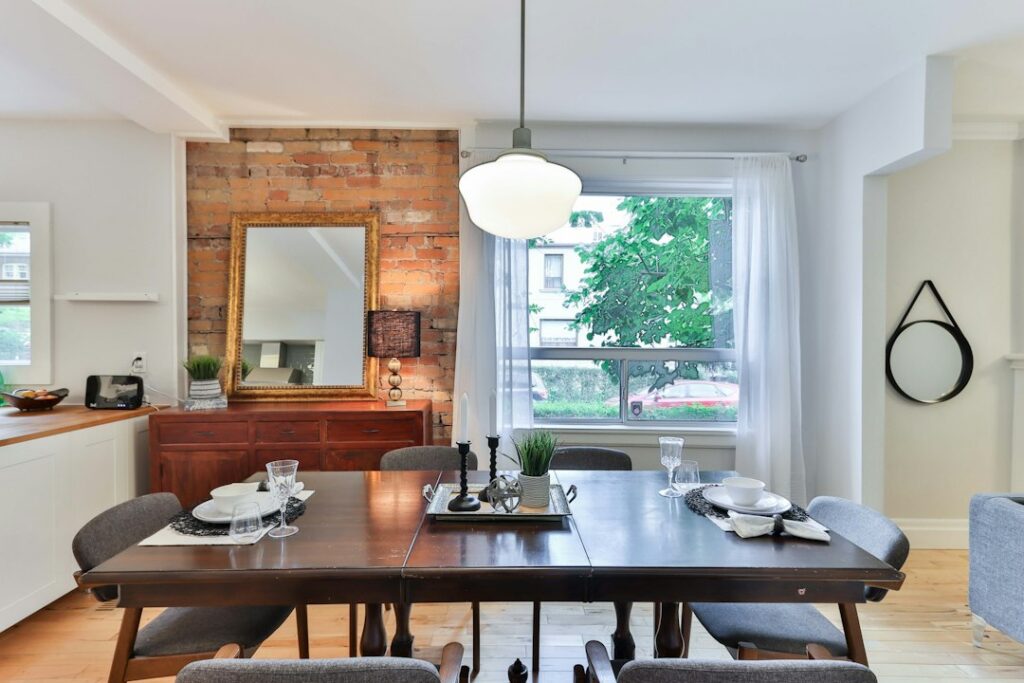
A wood and resin dining table is one of the few pieces of furniture that becomes the centrepiece of a room the moment it arrives. If you are searching for a resin dining table UK makers can build or supply, though, the choices can be confusing: imported flat-pack versions, ready-made stock tables and fully bespoke commissions all look similar online. This guide explains the UK timbers that suit resin best, sizes and seating, how pricing typically works in pounds, what to ask about delivery and access, and how to tell a well-made table from a quick copy.
For an overview of every style of resin furniture, start at our epoxy table hub, and for design details specific to dining, see epoxy dining table.
Why buy a resin dining table in the UK?
- Climate-matched timber. Slabs dried for British homes, typically to around 8–12% moisture content, are less likely to crack or cup once they meet central heating than timber dried for a different climate.
- You can see the slab. Buying from a UK workshop usually means you can view or be sent photos of the actual boards before work starts.
- Easier delivery and aftercare. Heavy tables are simpler to deliver, install and, if ever needed, refinish locally.
- No import surprises. Buying within the UK avoids customs charges and long sea-freight lead times.
UK and European timbers for wood and resin tables
| Timber | Character | Pairs well with |
|---|---|---|
| English or European oak | Hard, durable, pale to golden, prominent grain | Clear, smoky grey, deep blue or black resin |
| Walnut (European or American) | Rich brown with light sapwood edges | Black, clear, metallic or ocean blues |
| Elm | Wild, swirling grain, natural voids | Clear or tinted resin to fill voids |
| Ash | Light and contemporary | White, grey or pastel resins |
| Spalted beech | Dramatic dark zone lines | Clear resin that shows the patterning |
An oak and resin dining table is a popular choice in the UK thanks to oak’s durability and local availability, while walnut gives a darker, more luxurious look; our walnut epoxy table page shows that style.
Styles to choose from
- River tables: two live edge slabs with a resin “river” between them. See river table.
- Ocean tables: layered blue resin with white “waves” against the timber edge, shown on our ocean epoxy table page.
- Full-resin or encased tops: timber pieces suspended in clear resin.
- Solid live edge tops with resin-filled cracks: mostly wood, with resin used to stabilise and highlight natural defects. Our live edge dining table guide covers this approach.
- Lit tables: LED or fibre-optic lighting cast into the resin, as on our fibre optic resin table page.
Sizes and seating
Allow roughly 60 cm of table edge per diner, plus space for chairs to pull out.
| Table length | Typical seating | Typical width |
|---|---|---|
| 140–160 cm | 4–6 | 80–90 cm |
| 180–200 cm | 6–8 | 90–100 cm |
| 220–240 cm | 8–10 | 95–110 cm |
| 260 cm+ | 10–12 | 100–120 cm |
Leave about 90 cm between the table edge and walls or furniture so people can walk behind seated guests. Tops are usually 40–50 mm thick for stiffness over these spans.
Resin dining table UK prices
Prices vary with size, timber and design, so use these as broad typical ranges rather than quotes:
- Imported or mass-produced tables: typically from around £1,000–£2,000, often with thinner tops and less resin.
- UK-made 6–8 seater river or ocean tables: typically around £2,500–£5,000.
- Large, wide-slab, lit or highly custom tables: commonly £5,000 and upwards.
The biggest cost drivers are slab size and figure, the volume of resin (a deep river can need tens of litres), the hours of flattening, sanding and polishing, and the base. If you are comparing stock pieces, our guide to epoxy tables for sale lists the questions to ask any seller.
What to check before you buy
- Moisture content and drying: ask how and to what level the timber was dried.
- Resin type: thick rivers should be cast in a deep pour resin designed for that depth, with UV stabilisers to slow yellowing.
- Finish: glassy epoxy flood coat, hardwax oil or lacquer; each has different heat and scratch resistance.
- Flatness: the top should be flat and free of bubbles, dips and dull patches.
- Base engineering: fixings should allow seasonal wood movement, and steel bases should be powder-coated.
- Weight: a large wood and resin top can weigh well over 100 kg, so make sure the base and floor are suited to it.
Understanding why timber moves with humidity helps explain why drying and fixings matter; this overview of wood drying explains seasoning and moisture content in more detail.
Delivery and access in the UK
Heavy tops need planning. Measure doorways, stair turns and lifts before ordering; many makers deliver the top and base separately and assemble in the room. Ask whether delivery uses a two-person team, whether it includes installation and removal of packaging, and how flats above ground floor are handled. For London and the South East, workshop collection or local delivery is often simplest; nationwide delivery is usually arranged by specialist furniture couriers and priced by distance and weight.
Bespoke from a London workshop
Go Bespoke is a London workshop that designs and builds resin tables to order. A bespoke commission lets you choose the slab, resin colour, size, finish and base to suit your room, and approve the design before work begins. Lead times for a fully custom dining table are typically several weeks because resin pours cure slowly and in stages. Find out more about the process on our custom epoxy tables page.
Caring for a wood and resin table
Whichever resin dining table UK buyers choose, the care routine is similar and simple:
- Wipe with a soft damp cloth and a little mild washing-up liquid, then dry. Avoid abrasive pads, bleach and silicone polishes.
- Use placemats and trivets. Epoxy can soften and mark above roughly 50–60°C, so hot pans and dishes straight from the oven should never go directly on the top.
- Keep the table away from radiators and the strongest sunlight to reduce timber movement and slow resin yellowing.
- Refresh oiled timber areas once or twice a year, and buff light scratches in an epoxy finish with a fine polishing compound.
- Check base fixings after the first heating season, as timber settles into its new environment.
Watch it being made
See one of our tables come together in the workshop: a nebula resin top with fibre optic stars, from the first pour to the lights going on.
Resin art nebula resin table with fibre optic art. More builds on the Go Bespoke YouTube channel.
Frequently asked questions
How much does an epoxy resin dining table cost in the UK?
Typically from around £1,000 for smaller imported tables to £2,500–£5,000 for UK-made 6–8 seaters, and more for large or lit designs.
Are oak and resin dining tables durable?
Yes. Oak is a hard, hard-wearing timber, and a properly cured epoxy finish resists spills. Use mats for hot dishes, as epoxy can soften and mark under high heat.
Does resin go yellow on a dining table?
All epoxy yellows slowly with UV exposure. Resins with UV stabilisers and keeping the table out of strong direct sun keep it looking clear for much longer.
How long does it take to make a wood and resin dining table?
Often several weeks, allowing for slab selection, pours in stages, curing, flattening, sanding, finishing and base fabrication.
Is a bespoke resin dining table UK-made worth the extra cost?
For many buyers, yes: you choose the exact slab, size and colours, the timber is dried for British homes, and aftercare is local. If budget is the priority, a well-made stock table can still be good value, provided you check drying, resin type and finish.
Can a resin dining table be delivered upstairs?
Usually, if doorways and stairwells are measured first. Tops and bases are typically delivered separately and assembled in place.
Planning a table for your home? Get in touch about a bespoke commission and tell us your room size, seating and preferred timber.