How Long Does Epoxy Take to Dry and Fully Cure?
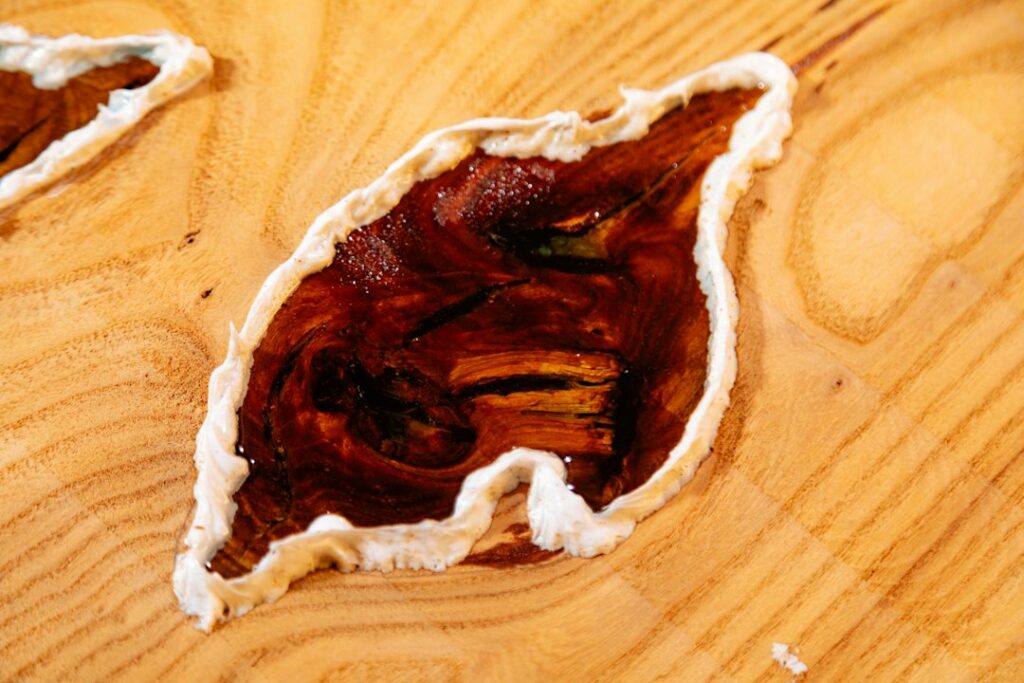
“How long does epoxy take to dry?” is one of the most common questions in resin work, and the honest answer is: it depends on which epoxy, how warm the room is and how thick the pour is. A quick-set adhesive can be hard in minutes, a table top coating is usually touch-dry overnight, and a deep river pour can still be curing a week or two later. This guide gives a practical timetable for each type of epoxy, explains the difference between drying and curing, and shows how to speed things up safely without ruining the finish.
If you are planning your first pour, read our main guide to how to pour epoxy resin alongside this page, as getting the mix and the room right is what makes cure times predictable.
Dry vs cure: what is the difference?
Epoxy does not dry in the way paint does. Most paints harden as water or solvent evaporates. Epoxy resin hardens through a chemical reaction between resin and hardener that links the molecules into a rigid network. That is why the stages are better described as:
- Working time (pot life): how long the mixed resin stays liquid enough to pour and spread.
- Gel: the resin thickens to a soft, jelly-like state. It will take a fingerprint.
- Tack-free or touch-dry: the surface no longer feels sticky, but the epoxy underneath is still soft and can dent.
- Handling or light-use cure: firm enough to demould, sand lightly or put back into gentle use.
- Full cure: the reaction is essentially complete and the epoxy reaches its full hardness, heat resistance and chemical resistance.
When people ask how long it takes for epoxy to dry, they usually mean touch-dry. When they ask about epoxy cure time, they mean the point at which it is safe to use normally. The two can be days apart.
How long does epoxy take to dry? Typical times by product
These are typical ranges at around 20–24°C. Always check the product’s technical data sheet, as formulas vary a lot.
| Product type | Working time | Touch-dry | Light use / demould | Full cure |
|---|---|---|---|---|
| Quick-set epoxy adhesive | 3–10 minutes | 15–60 minutes | 1–6 hours | About 24 hours |
| Table top / coating epoxy | 20–45 minutes | 8–24 hours | 24–72 hours | Typically 5–7 days |
| Art and craft resin | 30–60 minutes | 12–24 hours | 24–48 hours | Typically about 3–7 days |
| Deep pour / casting resin | Several hours | 24–72 hours | 2–5 days | Typically 7–14 days, sometimes longer |
| Epoxy wood filler and repair putty | 10–40 minutes | 2–8 hours | 12–24 hours (sandable) | About 24–72 hours |
| Floor coating epoxy | 20–40 minutes | 8–16 hours | Foot traffic after about 24 hours | Vehicles typically after 5–7 days |
| UV resin | Until exposed to UV | Seconds to minutes under a lamp | Minutes | Minutes in thin layers |
A few notes on the table. Repair products such as epoxy wood filler and wood rot repair epoxy are formulated to be sandable quickly, so you can paint the same or next day. Deep pour epoxy is deliberately slow, because a fast resin in a thick pour would overheat. And UV resin is a different chemistry altogether, curing only when exposed to ultraviolet light; see our guide to UV lights for resin for lamp times.
How temperature changes epoxy resin drying time
Temperature is the biggest single factor you control. Epoxy curing temperature recommendations usually sit around 20–25°C for both the room and the resin. As a widely used rule of thumb, each 10°C rise in temperature roughly halves the cure time, and each 10°C drop roughly doubles it. In practice:
- Above about 25°C: faster cure but shorter working time; deep pours may overheat.
- Around 20–24°C: the conditions most data sheet times are based on.
- Around 15°C: curing slows noticeably; surfaces stay tacky for longer and can develop a waxy film (amine blush).
- Below about 10–13°C: many epoxies barely cure at all and may never reach full hardness, even when warmed later.
Remember it is the temperature of the resin and the surface that matters, not just the air. A cold timber slab or concrete floor will chill a thin coat even in a warm room. Night-time drops in an unheated garage or workshop are a common reason for soft, cloudy or sticky results.
How thickness affects epoxy cure time
The curing reaction gives off heat, a process called exotherm. In a thick mass that heat builds up and speeds the reaction; in a thin film it escapes quickly, so the cure is slower. This gives two practical rules:
- Thin coats cure more slowly than you expect, especially on cold surfaces. A thin seal coat may feel tacky long after the bulk of a pour has gelled.
- Thick pours can cure too fast if you use a coating epoxy beyond its maximum depth. The result can be cracking, yellowing, smoke or warped moulds. Stick to the stated maximum pour depth and wait between layers.
The Wikipedia article on epoxy notes that because curing is exothermic, temperature has to be controlled, which is exactly why casting resins are formulated to react slowly.
How to speed up epoxy drying safely
You can shorten cure times, but only within the product’s limits:
- Warm the room before you pour and keep it warm for at least the first 24–48 hours. A thermostatically controlled heater is safer than a blow heater pointed at the work.
- Warm the resin and hardener bottles in a bowl of warm water before mixing. This also helps bubbles escape.
- Bring the object to room temperature first, especially timber slabs that have been stored in a cold space.
- Post-cure gently. Once the epoxy has gelled, a modest rise in room temperature can help it reach full hardness sooner. Do not exceed the maker’s guidance.
- Use a faster hardener if the manufacturer offers one, only for thin coats.
Things not to do: do not add extra hardener (the ratio is fixed, and extra hardener leaves the epoxy soft and sticky), do not put fresh pours in front of a fan heater that blows dust onto the surface, and do not seal a curing piece inside a sealed box with a heater. Keep the space ventilated.
Signs your epoxy has not cured properly
- Sticky patches after the expected cure time, often from poor mixing or an inaccurate ratio.
- Soft, bendy resin that dents with a fingernail after a week, usually from cold conditions.
- A greasy film on the surface, which is amine blush from humidity or cold; wash it off with warm soapy water before sanding or recoating.
Epoxy is a thermoset: once the molecules have cross-linked, the change is permanent and the resin cannot be melted and re-mixed, as Wikipedia’s article on thermosetting polymers explains. That is why a wrong ratio cannot be corrected after the event. Small sticky areas can sometimes be scraped out and re-poured. If a whole surface is soft, warming the room can help it firm up, but resin mixed at the wrong ratio will not fully recover and usually needs removing.
When can you use, sand or polish it?
As a practical guide for coating epoxies: handle lightly after 24 hours, sand and recoat after 24–72 hours depending on the recoat window, and wait for full cure, typically about a week, before heavy use, hot items or polishing epoxy resin to a high gloss. Products sold as table top epoxy usually list each of these stages on the label.
Watch it being made
Watch our first light-up resin table being made in the workshop, with dragons and creatures appearing in the resin art, and the colours, pours and finishing shown step by step.
Resin Art Dragons and creatures in resin art table My First Light-Up Resin Table. More builds on the Go Bespoke YouTube channel.
Frequently asked questions
How long does epoxy resin take to dry?
Most coating and craft epoxies are touch-dry in 8–24 hours at around 20–24°C, but take several days to a week to reach full cure. Deep pour resins take longer.
How long does epoxy take to cure fully?
Typically 5–7 days for coating epoxies and 7–14 days or more for deep pour casting resins, assuming a warm room. Cold conditions extend this significantly.
What is the best epoxy resin curing temperature?
Around 20–25°C for the room, the resin and the surface, kept steady for at least the first day or two.
Can I use a hairdryer to make epoxy dry faster?
Not as a way to cure it. A brief pass of a heat gun helps release surface bubbles, but blowing hot air over curing resin causes ripples and dust. Warm the room instead.
Why is my epoxy still sticky after 24 hours?
Usually because the room is too cold, the resin and hardener were not measured accurately, or they were not mixed thoroughly. Warm the space and give it more time before deciding to remove it.
Want to see real cure times in action? Watch our builds and pours on the Go Bespoke YouTube channel, where we show each stage from mixing to final polish.