Metallic Epoxy Floor: Designs, Costs & How It Is Done
Updated 17 October 2026
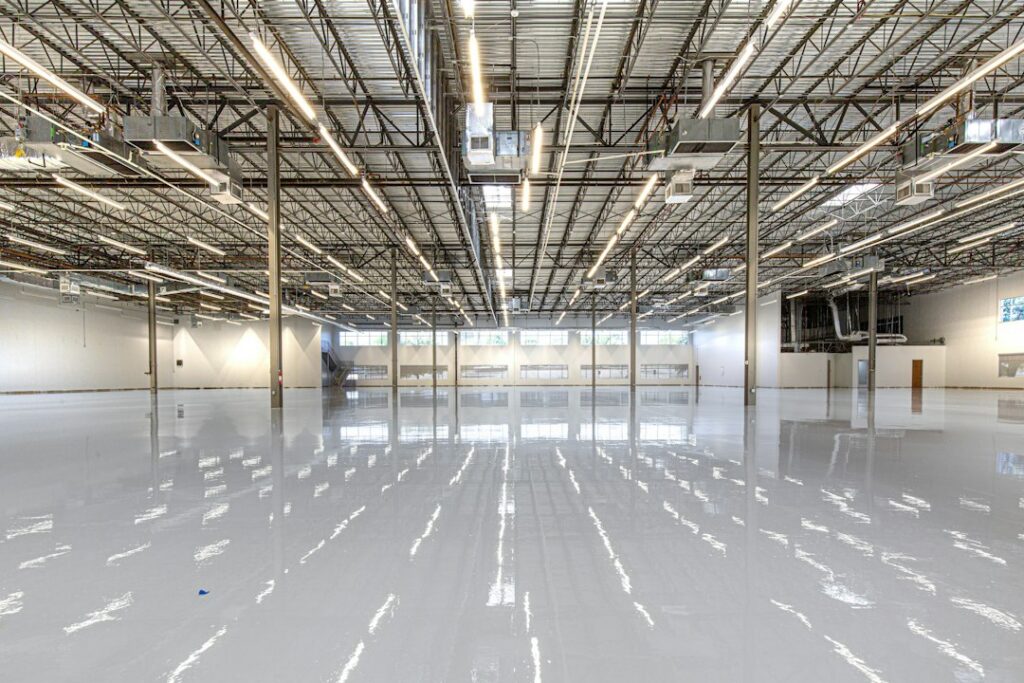
A metallic epoxy floor looks less like a coating and more like poured stone or liquid metal: swirls of silver, copper and bronze drifting through a glossy surface with real depth. No two floors come out the same, which is exactly the appeal for garages, basements, showrooms, kitchens and living spaces. The look is achieved with special pearlescent pigments that keep moving while the resin is wet, and the way the installer manipulates them decides whether you end up with a calm marble, a rolling ocean or a fiery lava pattern. This guide covers the main design styles, how the floor is laid, typical costs, durability and whether it is a realistic DIY project.
If you are still deciding whether resin is right for your floor at all, start with our epoxy floor guide, which covers the different coating systems, where they work and how long they last. Here we focus on the metallic finish itself.
What is a metallic epoxy floor?
A metallic epoxy floor is a multi-layer resin system laid over concrete, in which one coat is loaded with metallic or pearlescent pigment. The pigment particles are tiny flat flakes that reflect light. Because the coat is still fluid for a while, the flakes drift, settle and turn as the resin levels, and the installer moves them around with rollers, brushes, sprays or a blower. Where the flakes lie flat the floor looks bright and mirror-like; where they stand on edge it looks darker. That contrast creates the three-dimensional effect.
The pigments themselves are the same family used in table and countertop work, which our guide to metallic epoxy explains in detail, including how they differ from mica powder. On a floor, the difference is scale: you are working against the clock over tens of square metres rather than a single tabletop.
Metallic epoxy floor designs
Marble
A marble effect usually pairs a pale base colour, such as white, ivory or light grey, with fine veins of a darker or contrasting metallic. Veins are often drawn in with a brush or a squeeze bottle, then softened with a light roller or a solvent mist. The result reads as polished stone, which suits kitchens, hallways and living areas.
Ocean and water
Blues, teals and silvers moved in long, sweeping strokes create a floor that looks like moving water. Some installers add a little white to suggest foam.
Lava and fire
Lava floors combine black or charcoal with copper, orange, red and gold, broken up into cells and ridges. The high contrast hides dust and scuffs well, which is one reason it is popular in garages and gyms.
Galaxy and cloud
Dark bases with silver and violet “nebula” patches, or soft mixes of grey and pearl, give a more subtle, cloudy finish. A cloudy, low-contrast design is the most forgiving style for first-time installers, as uneven patches simply become part of the look.
Single-colour metallic
One metallic colour over a matching base gives a quieter, more uniform sheen with gentle movement.
How a metallic epoxy floor is done
Every manufacturer’s system is slightly different, so always follow the technical data sheet for the products you buy. The general sequence is:
- Test for moisture. Concrete that holds too much moisture can push the coating off. Basement and ground-floor slabs without a damp-proof membrane need particular care, as our guide to the epoxy basement floor explains.
- Grind the concrete. A diamond grinder removes laitance, old coatings and contamination and leaves a profile the epoxy can grip.
- Repair and vacuum. Fill cracks and holes, grind them flush and vacuum thoroughly. Any dust left behind will show through a glossy metallic coat.
- Prime. A penetrating epoxy primer seals the concrete and reduces outgassing, the air bubbles that rise from porous slabs.
- Apply a tinted base coat. A solid colour coat, usually close to the dominant metallic tone, gives a uniform background so thin areas do not look patchy.
- Pour the metallic coat. This is the design layer, mixed with the metallic pigment and applied thicker than a standard coating, often around 0.5–1mm depending on the system. It is poured in ribbons, spread with a squeegee or notched trowel, back-rolled, then manipulated to create the pattern while it is still fluid.
- Apply a protective topcoat. A clear polyurethane or polyaspartic topcoat adds scratch resistance and UV stability. An anti-slip additive can be mixed in here.
The concrete preparation is the same as for any garage floor coating; our step-by-step on how to epoxy a garage floor covers grinding, repairs and moisture testing in more depth.
Manipulation techniques
- Back-rolling: rolling the wet metallic coat in one direction creates long, flowing streaks.
- Brush and roller strokes: short, curved strokes form cells and swirls for marble and lava effects.
- Solvent spray: a fine mist of isopropyl alcohol on the wet surface breaks it into lacy cells. It is flammable, so no naked flames or sparks, and ventilate well.
- Air blowing: a leaf blower or heat gun on low pushes the pigment into ripples and ridges.
- Tinted veins: a contrasting metallic or white drizzled from a bottle and dragged into the wet coat.
Installers wear spiked shoes to walk on the wet coat without leaving footprints. Working in teams is normal: one person mixes, another pours and spreads, and another does the design work, because the open time is limited.
Quantities and planning
Metallic systems use more material than a standard roll-on coating because the design layer is thicker. Measure the floor area carefully and add a margin for the uneven surface of concrete. As a rough example, a single garage of 3 × 6m is 18m². At 0.75mm thick, the metallic coat alone needs about 13.5 litres (18 × 0.75), before primer, base coat and topcoat. Our epoxy calculator helps you check volumes for your own room and thickness.
Temperature matters a great deal. Most systems want the air and slab between roughly 15–25°C, with the slab several degrees above the dew point so condensation does not form. Cold slabs slow the cure and make the pigment behave unpredictably.
Costs
Costs vary with floor size, condition and design complexity. As a broad guide:
| Route | Typical cost | Notes |
|---|---|---|
| DIY metallic floor kit | Typically £20–£45 per m² ($2–$5 per sq ft) in materials | Plus grinder hire, diamonds, primer, spiked shoes and tools |
| Professional installation | Typically £60–£120+ per m² ($6–$15+ per sq ft) | Includes grinding, repairs, design work and topcoat |
| Complex bespoke designs | Higher than standard rates | Multiple colours, logos or inlays add labour |
Grinder hire typically costs £60–£150 ($75–$180) a day. Larger rooms, cracked or contaminated concrete and existing coatings to remove all push prices up.
Durability, slip resistance and care
A properly installed metallic floor with a good topcoat is hard-wearing and easy to clean, and is often expected to last many years in a home garage or living space. The topcoat takes the wear from grit, tyres and dropped tools, and can be scuffed and recoated when it looks tired. Industrial spaces with forklifts and heavy chemicals need a different, thicker system, which our comparison of industrial and residential epoxy flooring explains.
Gloss resin can be slippery when wet, so for garages, kitchens, utility rooms and anywhere near an outside door, add an anti-slip aggregate to the topcoat and use entrance mats. The Health and Safety Executive’s guidance on preventing slips and trips is aimed at workplaces but explains clearly how floor surfaces, contamination and footwear interact.
Everyday care is simple: sweep or dust-mop regularly, clean with a pH-neutral cleaner and a soft mop, and avoid citrus or vinegar cleaners and abrasive pads that dull the topcoat. Use felt pads under furniture and a mat under jacks or stands.
Can you do a metallic epoxy floor yourself?
It is possible, but it is one of the more demanding DIY floor projects. The preparation is heavy physical work, the metallic coat has a short working time, and mistakes in the design layer are hard to undo once it starts to gel. For a sense of how much prep any epoxy floor demands, Bob Vila’s guide to applying epoxy floor paint walks through cleaning and etching for a simpler system. If you go ahead:
- Practise the technique on a few sheets of hardboard first, using the same products.
- Choose a forgiving design such as cloud or lava rather than precise marble veining.
- Recruit at least one helper and plan the route so you never work yourself into a corner.
- Wear nitrile gloves, eye protection and a respirator with organic vapour cartridges; ventilate the space and keep children and pets away.
- Kits sold for plain garage coatings are usually not enough for a metallic system; our guide to garage floor epoxy kits explains what to look for on the label.
For large living areas, a floor with underfloor heating, or a slab with a moisture problem, a professional installer is usually the safer choice.
Watch it being made
See one of our tables come together in the workshop: a nebula resin top with fibre optic stars, from the first pour to the lights going on.
Resin art nebula resin table with fibre optic art. More builds on the Go Bespoke YouTube channel.
Frequently asked questions
How much does a metallic epoxy floor cost?
Typically £20–£45 per m² ($2–$5 per sq ft) in materials for DIY, and £60–£120 or more per m² ($6–$15+ per sq ft) for a professional installation, depending on prep and design.
Is a metallic epoxy floor slippery?
Smooth gloss resin can be slippery when wet. Adding an anti-slip aggregate to the topcoat and using mats at entrances reduces the risk considerably.
How long does a metallic epoxy floor last?
With good preparation and a protective topcoat it can last many years in residential use. Recoating the topcoat when it wears keeps the design underneath protected.
Can you put a metallic epoxy floor over tiles or old coatings?
Sometimes, if they are firmly bonded and properly abraded, but most systems prefer bare, ground concrete. Check the manufacturer’s guidance for your substrate.
Will a metallic epoxy floor turn yellow?
Epoxy can yellow in sunlight, which shows more on pale designs. A UV-stable polyurethane or polyaspartic topcoat helps protect the colours.
Want to see metallic pigments in action before you commit? Watch our resin builds on the Go Bespoke YouTube channel, and read our guide to epoxy garage floors for the full picture on coating a garage.