Clear Epoxy Table
Updated 17 October 2026
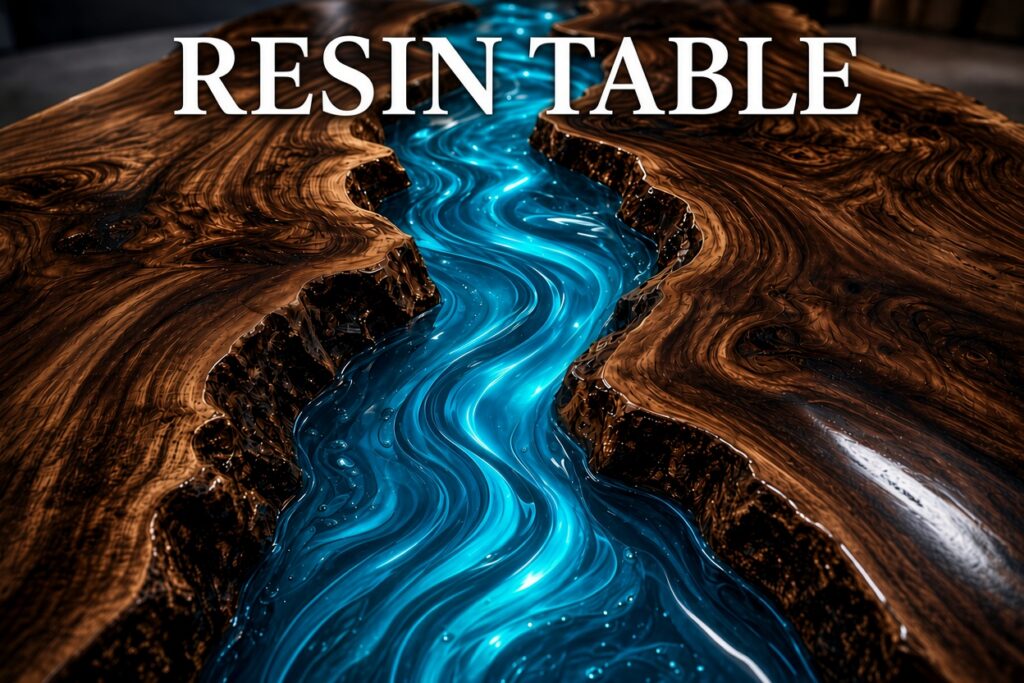
A clear epoxy table is the purest expression of resin furniture: no pigment, no swirl, just a slab of glass-like material that lets you look straight through to the timber, stones or objects inside. When it works, the resin seems to vanish and the wood appears to float. When it does not, a faint yellow cast or a milky haze gives the game away at once.
Clarity is unforgiving because there is nowhere for flaws to hide. This page explains what makes resin water-white, why clear resin yellows, how to avoid haze and cloudiness, and how to use transparency to show off timber and embedded objects.
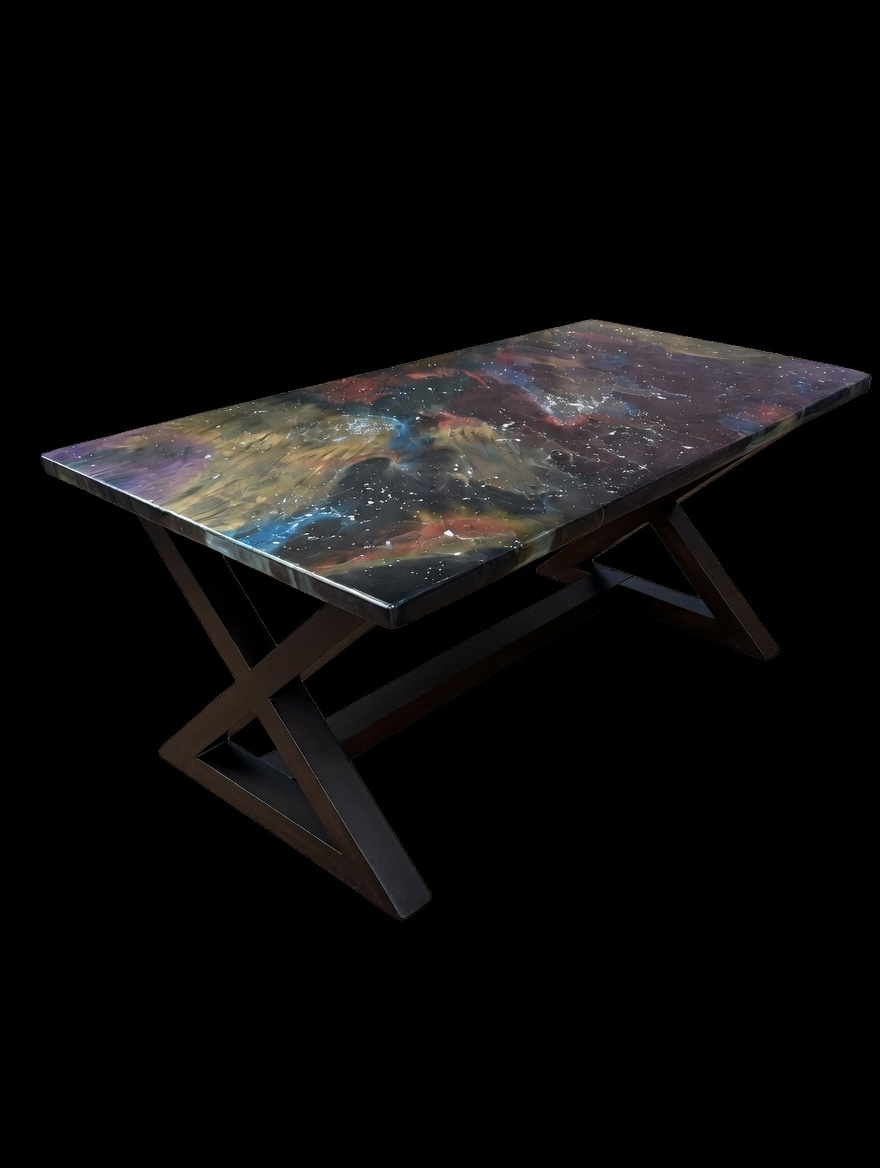
What makes a clear epoxy table look like glass
Glass-like resin has three qualities. It is colourless, meaning it adds no tint of its own. It is transparent, meaning light passes through without scattering. And it is flawless, meaning there are no bubbles, dust, streaks or ripples to catch the eye. Lose any one of these and the illusion weakens.
Deep pour epoxy resin and other resins sold for clear casting are often described as water-white. That phrase refers to the resin having very little natural colour when freshly cured. Even so, a thick block of any epoxy will look slightly different from a thin film, because colour builds up with depth, just as a glass of water looks clear but a swimming pool looks blue-green.
Why clear resin yellows
Yellowing is the most common worry for anyone considering a clear epoxy table, and it is worth understanding rather than fearing. There are three main causes:
- Ultraviolet light: sunlight slowly breaks down chemical bonds in the cured resin, causing a gradual amber shift. Resins with UV stabilisers, sold as UV resistant epoxy resin, slow this process but do not stop it entirely.
- Heat: heat accelerates ageing. A table beside a radiator or in a conservatory will change faster than one in a cool, shaded room.
- Chemistry and age of the product: some hardeners naturally carry more colour, and resin that has been stored for a long time or exposed to air can darken in the bottle before it is even used. Check the date on any epoxy resin kit before a clear pour.
The practical answer is to choose the right epoxy resin for tables, one described for clear casting, use it fresh, and place the finished table away from direct, all-day sun. Many owners find that a gentle mellowing over years suits warm timbers, but if absolute colourlessness matters, placement is as important as product choice.
Avoiding haze, cloudiness and blush
Haze is a different problem from yellowing. It appears as a milky or foggy look, sometimes right through the casting and sometimes as a greasy film on the surface. Common causes include:
- Moisture: damp timber, humid air or condensation can react with the curing resin and leave a cloudy bloom, often called amine blush on the surface.
- Cold: resin poured in a cold room cures slowly and unevenly, which can trap micro-bubbles and cloudiness.
- Poor mixing: unmixed streaks of resin or hardener show as soft, wavy lines or sticky patches. Scrape the sides and base of the mixing container thoroughly.
- Micro-bubbles: tiny bubbles that are too small to see individually scatter light and read as haze. Mixing slowly, warming the resin slightly before use and pouring gently all help.
A warm, dry workshop held at the temperature your resin specifies solves a surprising number of clarity problems. Kiln-dried timber that has been sealed before the main pour is equally important.
Looking through resin at the timber
The real reward of a clear epoxy table is seeing timber in a new way. Through clear resin, you notice the texture of a live edge, the bark line, the tiny cracks and the colour change from heartwood to sapwood. With good lighting, the edge of the slab casts a soft shadow onto the base of the casting, adding a sense of depth.
Timbers with strong figure and dark colour, such as walnut, olive or burr oak, look especially dramatic. Pale timbers can look wonderful too, but any yellowing of the resin over time will be more noticeable against them. Finishing the timber edges carefully before casting pays off, because every saw mark and fibre will be visible through the resin.
Clear-cast embedments
Clear resin is also the natural choice for embedding objects. Common choices include river stones, dried flowers, seed pods, coins, keys, maps and small mementoes. A few principles keep embedments looking crisp:
- Seal first: porous objects such as wood, paper and stone release air when resin hits them. Brushing on a thin seal coat and letting it cure stops a stream of bubbles from rising into the clear layer.
- Dry thoroughly: any moisture in flowers or organic material can cause browning or cloudiness around the object.
- Layer for depth: placing objects at different heights across several pours gives a far more natural, three-dimensional look than laying everything on the bottom.
- Keep it sparse: clear casting works best when objects have space around them, so the eye can appreciate the transparency.
Caring for a clear epoxy table
A clear epoxy table top shows scratches and dust more readily than a coloured one, so use felt pads under ornaments, coasters under hot drinks and a soft microfibre cloth for cleaning. Avoid solvent cleaners and scouring pads. Minor scuffs can be polished out, which is one of the advantages of a thick, solid resin surface, and a worn finish can be renewed with table top epoxy resin.
When making one yourself, ventilate the room well, wear nitrile gloves and eye protection, and use a respirator with organic-vapour cartridges, particularly during sanding and polishing.
If you are curious why a fully clear pour depends on accurate mixing and a complete cure, Wikipedia’s epoxy article explains how resin and hardener cross-link, along with the skin-sensitisation risks of handling uncured material.
Frequently asked questions
Will my clear epoxy table turn yellow?
All epoxy changes slowly with UV and heat. Choosing a resin made for clear casting, using it fresh and keeping the table out of direct sunlight keeps it clear for much longer.
Why is my clear resin cloudy?
Usually moisture, cold or micro-bubbles. Work in a warm, dry room, seal and dry the timber, and mix slowly and thoroughly.
Can I embed flowers in clear resin?
Yes, if they are completely dry and sealed first. Fresh or damp flowers tend to brown and can cloud the resin around them.
Watch clear resin at work
See how clarity is achieved in our own builds on the Go Bespoke YouTube channel, @go-bespoke, from casting to the final polish.
Top 10 most-watched on YouTube
Video 1 of 10 — one of the most-viewed YouTube videos for “clear epoxy table”: DIY Farmhouse Dining Table w/ Epoxy Inlays Using Reclaimed Barnwood by Jonny Builds (12,508,656 views as of 13 October 2026).
Want a crystal clear table of your own? Get in touch for a bespoke quote.